• Skip to main content
  • Skip to after header navigation
  • Skip to site footer

Sallie Schaaf Borrink

  • About
  • Subscribe
  • Premium Content
    • Purchase Premium Access
    • Premium Member Log-in
  • Categories
        • Free Printables
        • Gifted & 2e
        • Gracious Christian Parenting
        • Homemaking
        • Homeschooling
        • Our Family Stories
        • Questioning the Narrative
        • Rebuilding America
        • Simple Living
        • Unit Studies & Learning Themes
        • Tags
  • My Printables Shop
    • The Lifetime Pass
    • Explore The Shop
    • Your Cart
    • Your Account Details
      • View Your Orders
      • Go To Your Downloads
      • My Account
    • Lost Password Help
    • Digital Products Terms of Use
  • Comments
  • Forum
    • Login
    • Sign Up
  • Search

Welcome & Miscellaneous

See the sidebar for all categories

Start Here

Subscribe

Donate

Tags

Sallie’s Rebuilding America – My News Analysis Website

My Recommendations

The Shop

Explore The Shop

The Lifetime Shopping Pass

Your Cart

Digital Products Terms of Use

Your Account

View Your Orders

Go To Your Downloads

Lost Password Help

Cozy & Simple Living

Simple Living

Homemaking

Our Cozy Family Life

The Prudent & Prepared Homemaker

Free Homemaking Printables

Holidays & Traditions

Comfort Food Recipes

Health

Home Education & Parenting

Home Education

Discipleship Homeschooling

Gracious Christian Parenting

Gifted/2e Parenting for Christians

Homeschooling a Creative Child

Homeschool Mom Encouragement

Homeschool Planning

Gifted/2e Homeschooling

Unit Studies & Themes

Unit Studies & Resources

Unit Studies

Unit Study Activities

Poetry

Christian Faith

Christian Faith

Prayer

Marriage

Bible Readings & Christian Devotionals

Morning Hope

Eventide Blessing

Streams in the Desert

You are here: Home / Homeschooling / Homeschooling Elementary School / Teaching Children To Read For Pleasure


Archives

Teaching Children To Read For Pleasure

Thursday, March 25, 2010 (Updated: Wednesday, July 12, 2023)
3 Comments

Post may contain affiliate links. Read my disclosure statement.

Growing up I was a voracious reader. But as I’ve admitted elsewhere, I’m not in any danger of being labeled a literary snob. I’m not much into reading all the classics that everyone says you have to read.

Frankly, I read for two reasons. One, I want to learn something about a particular topic. Two, to escape and relax.


I read for the pleasure of it. I think that is why I didn’t enjoy AP English very much. Too much analysis and picking apart what the author meant by this object or this symbolic metaphorical doohickey.

That’s just not really me.

So I found this article quite interesting: The Case for Slow Reading.  From the article (bold mine):

Open any newspaper and you are likely to find a story of some school whose students have read a million, two million—some big number of pages. As a payoff, the teachers wear pajamas for a day, or the principal shaves his head or agrees to eat worms, a reward to the delighted students. Then Pizza Hut or some other franchise that sponsored the event hands out coupons for nonnutritious food to the voracious readers.

It’s all great fun, a good story, a terrific photo op. But something bothers me about this picture—it’s as though reading has become a form of fast food to consume as quickly as possible, just one more cultural celebration of speed.

This association of good reading with speed permeates our schools, from the hugely popular Accelerated Reading Program, to “nonsense word fluency” tests in which young children have to decode “words” at a rate of more than one per second, to standardized tests in which reading is always “on the clock.” To be quick is to be smart; to be slow is to be stupid.

As a confessed slow reader, I would like to make a case for slowness. By slowness, I don’t mean the painful, laborious decoding some students must do or the plodding march through some assigned novels that may take weeks. Any pleasure or success in reading requires fluency and the ability to read with some pace.

But there is real pleasure in downshifting, in slowing down. We can gain some pleasures and meanings no other way. I think of the high-speed trains in Europe that I always wanted to ride, ones that hurtle through the French landscape at more than 200 miles per hour—that is, until I learned that at these high speeds, even the distant scenery becomes a blur. The retina simply can’t take in a clear picture at that rate of movement.

The same thing can happen in reading. I’d like to explore what we miss when we define good reading as fast reading and to argue for what Ellin Keene has called “dwelling” in the texts we read.

Author and media theorist Neil Postman provides a foundation for this argument in his classic book, Teaching as a Conserving Activity (1979). Schools, Postman argues, should act on a thermostatic principle; a thermostat acts to cool when a room is too hot and heat when a room is too cool. According to Postman, schools should act to check—and not to imitate—some tendencies in the wider information environment. “The major role of education in the years immediately ahead,” he writes, “is to help conserve that which is necessary to a humane survival and threatened by a furious and exhausting culture” (p. 25).

I get the impression Caroline is going to have certain areas where she kind of ambles along at her own pace. She does not like to be rushed and, unless something changes in the coming years, I can see her as one of the children who is smart as a whip but does not do pressure-packed standardized testing very well.

Pressure-packed reading seems absolutely contradictory to me. Reading should be pleasurable and enjoyed at a leisurely pace.

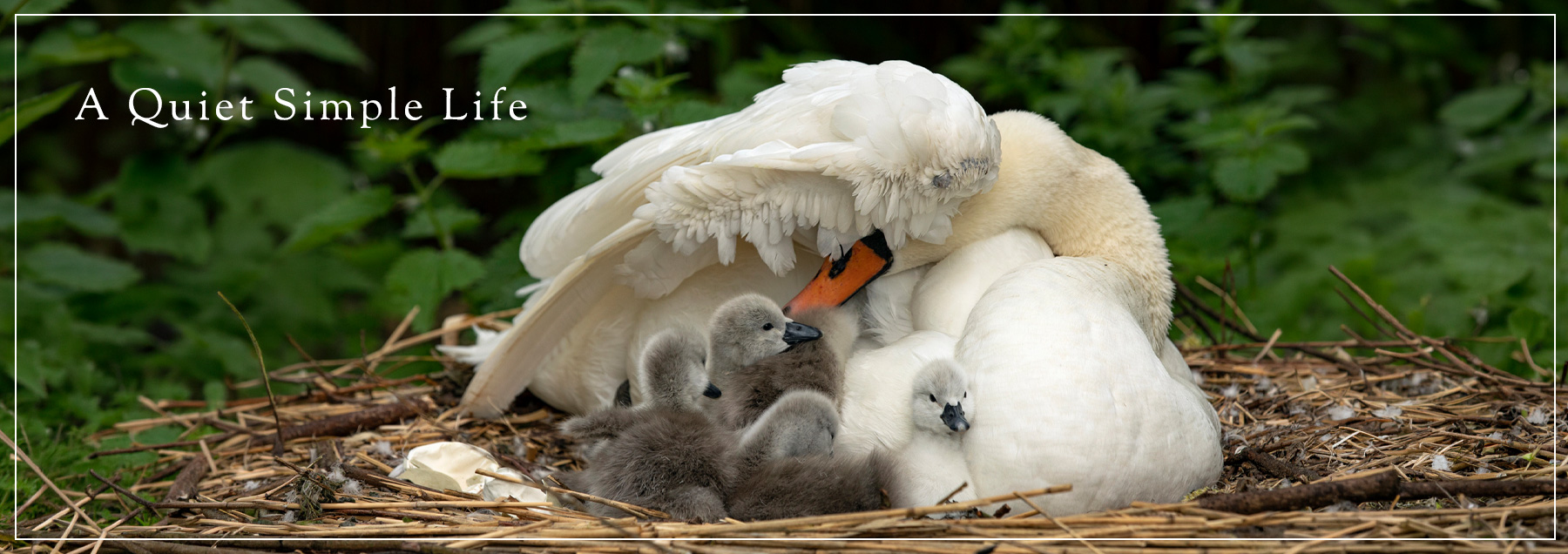
So it will be interesting to see how this develops in our home. We are doing our best to live a quiet, simple life. We have found the pleasure of downshifting and slowing down. How that translates into Caroline’s education has yet to be seen. But I hope to give her the gift of loving and savoring reading.

Category: Homeschooling Elementary School

About Sallie Borrink

Sallie Schaaf Borrink is a wife, mother, homebody, and autodidact. She’s a published author, former teacher, and former campus ministry staff member. Sallie owns a home-based graphic design and web design business with her husband (DavidandSallie.com).

You Might Also Like

Relaxed Homeschooling Math in Early Elementary

Stanford Achievement Test For Homeschoolers

Before and After Decluttering Our Homeschool Room

Previous Post:Young 5’s or Kindergarten For Children With Summer Birthdays?
Next Post:Introverts in the Church

Reader Interactions

Comments

  1. sem

    Thursday, March 25, 2010 at 5:21 pm

    I have two boys and both love books. The older is reading very proficiently and quickly, but not because I pressured him to. The younger is probably more like your Caroline. He will not be pushed into anything, but has taught himself the alphabet, letter sounds and some sight words. I suspect that if I applied any pressure to the process, he would close down. So, having learned my lesson with him many times over with him, I sit back quietly and take it all in.

    Reply
  2. Amie

    Friday, March 26, 2010 at 6:07 am

    Again, Carolina and Ellie are sounding like twins separated at birth 🙂 Not likely though. Ellie is almost 5 1/2 now and is SUPER smart. No doubt about that, but she too is a go at her own pace type. Until just recently she wouldn’t even say her ABC’s for me, but we will be reading together and I will pause at the word “yes” or “no” or ask her the beginning sounds of words and she will read them to me. I have a idea that some day she will pick up a Narnia book (or something similar) and just start reading.

    I am a fast reader, but I do like to read things just for the enjoyment of it – not over thinking it.

    Reply

Leave a Reply to Amie Cancel reply

Your email address will not be published. Required fields are marked *


Thank you for your comment. I read and appreciate each one even if I am unable to respond.

Sidebar

Sallie Schaaf Borrink

For 20+ years, I’ve been writing about following Jesus Christ and making choices based on what is true, beautiful, and eternal. Through purposeful living, self-employment, and homeschooling, our family has learned that freedom comes from a commitment to examine all of life and think for yourself. 

I hope you will join me here where we discuss all of life each day.

Categories

Search

Access all of my Premium Content for just $10/month

All of my printables for just $37!

Popular Today

  • A colorful image of sacred geometry related to MegatronExplaining Metatron from an Orthodox/Historical Christian Perspective
  • Free Great Lakes Map Printable POSTFree Great Lakes Map for Homeschoolers
  • Classical Conversations Negatives and Why We Didn’t Join SIMPLEClassical Conversations Negatives and Why We Didn’t Join
  • Free Printable 100 Field Trip Ideas for Homeschoolers100 Field Trip Ideas for Homeschoolers | Free Printable
  • Becoming Useful For the Kingdom is Inefficient SIMPLEBecoming Useful For the Kingdom Is Inefficient
  • Dyscalculia vs. Math Anxiety Assessment for Homeschooling ParentsDyscalculia vs. Math Anxiety Comparison for Homeschooling Parents
  • Fresh ingredients for Autoimmune Protocol comfort food recipesThe Ultimate List of AIP Comfort Food Recipes
  • Of Eosinophilic Esophagitis, a gifted child, and a husband trying to keep up SIMPLEOf Eosinophilic Esophagitis, a Gifted Daughter, and a Husband Trying To Keep Up
  • Disciplining Gifted and 2e Children in the Christian Faith SIMPLEDisciplining Gifted & 2e Children in the Christian Faith
  • What is Heresy – When Guidelines Become Guillotines SIMPLEWhat is Heresy? When Guardrails Become Guillotines
  • A Sample Kindergarten Homeschool Schedule for a Creative, Dreamer Child SIMPLEA Sample Kindergarten Homeschool Schedule for a Creative, Dreamer Child
  • Our Family’s Experience with Minecraft SIMPLEOur Family’s Positive Experience With Minecraft


A Christian Nation

"The real object of the first amendment was not to countenance, much less to advance, Mahometanism, or Judaism, or infidelity, by prostrating Christianity; but to exclude all rivalry among christian sects, and to prevent any national ecclesiastical establishment, which should give to a hierarchy the exclusive patronage of the national government."

Joseph Story (Associate Justice of the Supreme Court), Commentaries on the Constitution of the United States (1833), § 1871.

countenance: To favor; to encourage by opinion or words; To encourage; to appear in defense (Websters Dictionary 1828)


What Can I Help You Find Today?

Home

About Sallie

Contact

Privacy Policy

Disclaimers & Disclosures

Tags

Premium Content

Subscribe

Comments

Forum

Make a Donation

My Printables Shop

The Lifetime Pass

My Account

Cart

Lost Password Help

Digital Products Terms of Use

Rebuilding America

Free Printables

Unit Studies & Learning Themes

Homeschooling

Copyright © 2005–2026 · Sallie Schaaf Borrink · All Rights Reserved · Powered by Mai Theme

Scroll Up
We use cookies to ensure that we give you the best experience on our website. If you continue to use this site we will assume that you are happy with it.