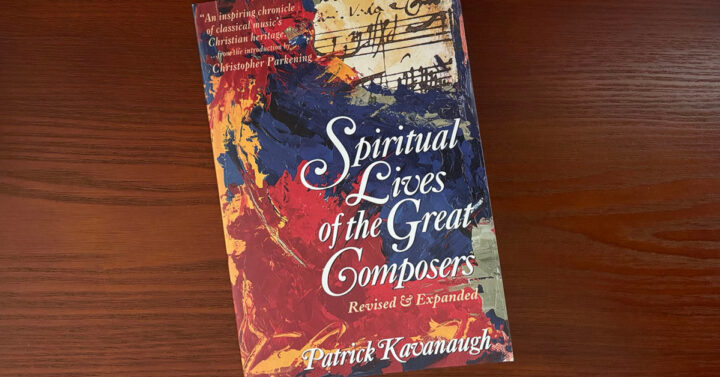
I received Spiritual Lives of the Great Composers by Patrick Kavanaugh as part of the History of Classical Music | Beautiful Feet Curriculum Review I did many years ago. As it turned out, we did not finish that curriculum then for a variety of reasons I won’t get into here. However, we did use parts of it including Spiritual Lives of the Great Composers as part of a classical music and piano credit we did for Caroline’s last year of high school.
Like so much of history that has been stripped of its Christian depth, we rarely hear about the spiritual lives of these men. If we do, it is only discussed in a general way. And yet Christianity played a major role in both their professional and personal lives. We truly do not know these men if we don’t see the impact of Jesus Christ in their life and work.
The Great Composers
Here is how Patrick Kavanaugh introduces his book in the Preface.
In the twentieth century, so much has been written about the negative side of composers’ lives—anecdotes about their conceit, their tempers, their financial troubles, and their many failures—that a grossly inaccurate picture is often widely accepted without question. I wish to highlight verifiable aspects of these men’s lives as they strove for good, sought to understand God, and found meaningful spiritual purpose in their lives.
Much of the material presented here is not emphasized in typical biographies. Instead, my material has been gathered largely from composers’ letters and writings and recollections of these composers’ friends and families. Extensive notes have been inserted to assist the reader in further research on the composers’ beliefs.
The chapters conclude with some personal thoughts concerning a particularly striking characteristic of each composer’s life—a characteristic that may have enabled them to achieve their respective places in history. All too often, studies on distinguished men become mere theoretical exercises. Few encourage the enrichment of the reader (and author). Therefore, these sections and the book’s conclusion were written with the hope that readers may find inspiration, encouragement, and personal application. I have also provided a short section entitled “Recommended Listening” to assist those who may be new to the music of these composers and want to further explore the magnificence of their music.
The composers in Spiritual Lives of the Great Composers include:
- Johann Sebastian Bach
- George Fréderic Handel
- Franz Joseph Haydn
- Wolfgang Amadeus Mozart
- Ludwig van Beethoven
- Franz Peter Schubert
- Felix Mendelssohn
- Frédéric Chopin
- Franz Liszt
- Richard Wagner
- Charles Gounod
- Cesar Franck
- Anton Bruckner
- Johannes Brahms
- Antonin Dvořák
- Edward Elgar
- Ralph Vaughan Williams
- Charles Ives
- Igor Stravinsky
- Olivier Messiaen
The men came from a wide variety of backgrounds. Some were born into poverty and others grew up with plenty. A few were pushed by their parents to not go into music. A few wanted to be priests and ended up musicians. Some were pushed to study law. Some lived lengthy lives and others were called home much sooner.
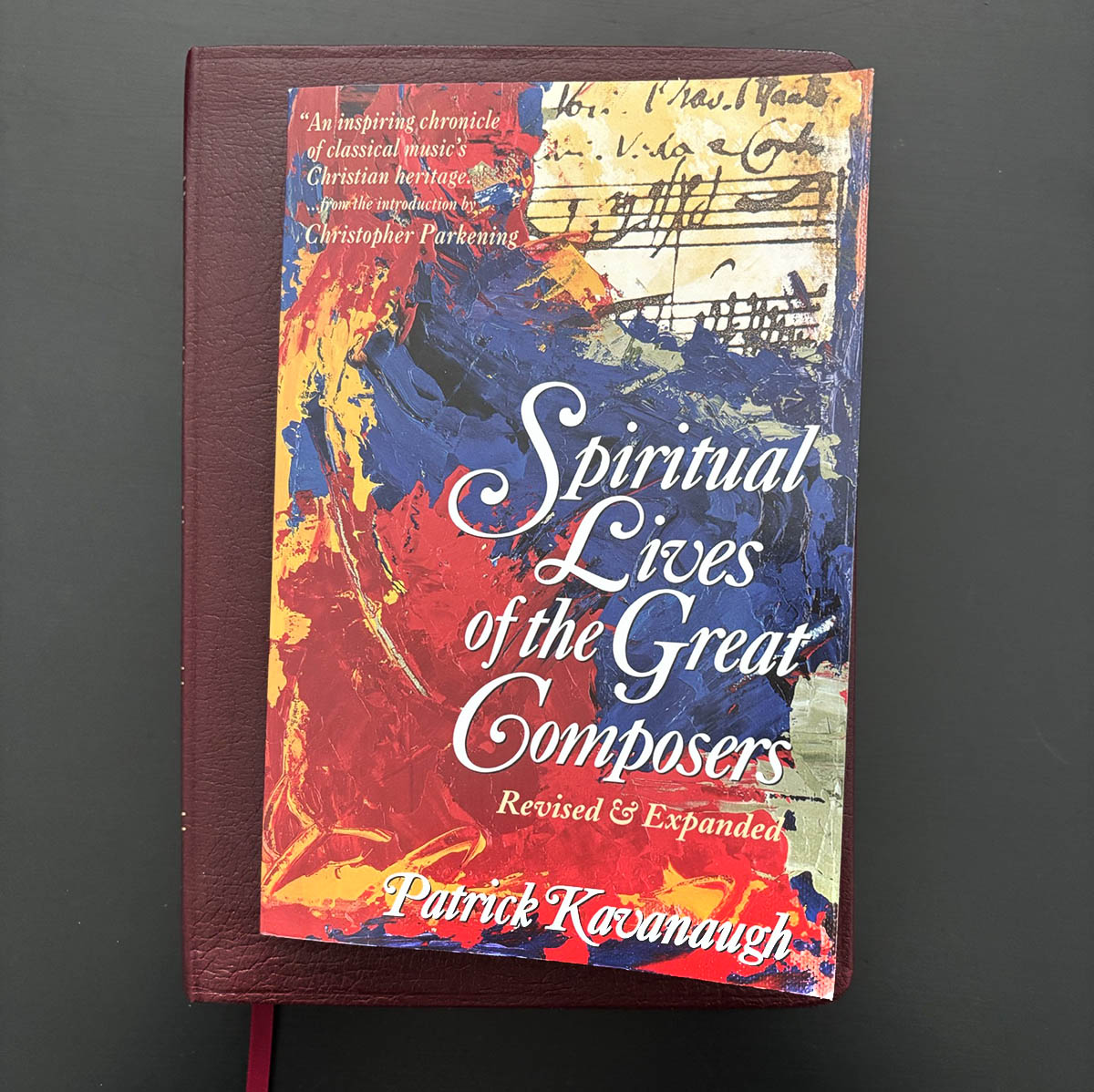
They came from a variety of church traditions. Sometimes their spiritual upbringing and the source of their income did not neatly align. Some of the men were deeply faithful to God throughout their life and others lived lives of sin and immorality before they eventually returned to Christ. Each spiritual journey is unique.
Homeschooling with Spiritual Lives of the Great Composers
The book is such an intriguing look at how God worked in the individual lives of these great composers. Caroline and I both thoroughly enjoyed reading it. It sparked many interesting conversations about these men and their work.
We kept this pretty simple. I read a chapter aloud over one or two days. Then we discussed it and watched performances of the composer’s music on YouTube. A few times additional topics came up that we spent more time looking into online, but overall we simply enjoyed becoming acquainted with these gifted men. (We did skip the last composer due to the heavy nature of the topic at the time.)
Because the composers are covered in chronological order, it also takes you through the progression of the various major music periods. By the last few chapters of the book, Caroline had a greater understanding of why she hears lots of baroque music, some classical music, and almost nothing from modern composers in our home. LOL! It makes for a great conversation topic regarding the increasing awfulness and chaotic nature of music and the current state in which we find the world (including architecture).
I do find it a bit perplexing that this book is included in a homeschool curriculum marketed for grades 4-8 as it does contain some more mature themes. They are handled tastefully, but I can’t imagine reading this to a fourth or fifth grade child. I would encourage any parent thinking about using it with children below high school age to read it first and make sure it is a good fit for your particular child and family.
Great Composers Thinking for Themselves
One of the things that struck me personally is how many of the men did not fit neatly into one theological grid or denomination. They were clearly devoted to God, but could not be neatly categorized. A few times I felt a true kinship with some of the men in this regard.
There were a few composers I knew nothing about when we started reading. I also discovered that my general impression of some of them was wrong or incomplete which was also interesting.
One note about the introduction. It was written by Christopher Parkening. If you haven’t had the pleasure of being introduced to his classical guitar music, I can recommend two recordings we own and enjoy: Parkening Plays Bach and Simple Gifts.
Overall, I think Spiritual Lives of the Great Composers is a book many Christians would enjoy. It puts a real person with a life story and Christian testimony behind the incredible music we listen to decades or even hundreds of years later.

Leave a Reply