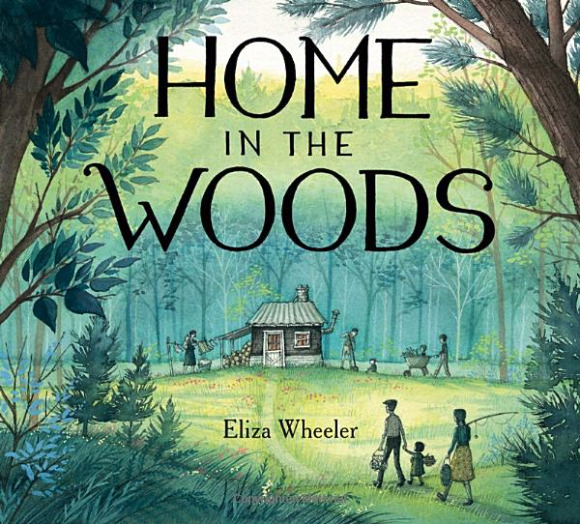
Sometimes I see a book in the bookstore and instinctively know there is a high probability it will be coming home with me. Home in the Woods by Eliza Wheeler was one of those books.
I will admit that I almost passed it by because the artwork style on the opening page was not immediately my favorite. But I kept reading because I thought I would like the story. I am so glad I did. This is a beautiful, tender picture book about family, work, hardship, resourcefulness, the seasons, and making a home in a difficult place.
Book Snapshot
Author: Eliza Wheeler
Illustrator: Eliza Wheeler
Ages: 5–9
Themes: family, Great Depression, Wisconsin, seasons, woods, resilience, homemaking, hard work, resourcefulness
Best For: seasonal studies, family culture discussions, Great Depression history, nature study, simple living, and thoughtful read-alouds
About the Book
Home in the Woods is based on the childhood experience of Eliza Wheeler’s grandmother. During the Great Depression, a family must move into a small tarpaper shack in the northern woods of Wisconsin after the death of the father. The mother and eight children have very little money, so every member of the family must help as they learn to live with what they have.
The story begins in summer and follows the family through their first year in the woods. They garden, gather, preserve food, make do, endure winter, and find moments of joy and beauty along the way.
What makes this book especially meaningful is the way it shows hardship without making the story feel bleak. The family works hard. They face real difficulty. But they also sing, laugh, create, celebrate, and love one another well. It is a lovely picture of family culture being built in the middle of necessity.
Why This Book Works for Homeschooling
Home in the Woods works beautifully for homeschooling because it offers so many natural connections without needing an elaborate lesson plan. It can be read as a family story, a seasonal book, a history connection, or a gentle introduction to simple living and resourcefulness.
This book is especially useful for:
- History: introducing children to the Great Depression through one family’s experience
- Geography: locating Wisconsin and discussing the northern woods
- Nature Study: observing trees, gardens, seasons, weather, and wild food
- Family Culture: talking about cooperation, responsibility, gratitude, and making a home
- Practical Life: discussing gardening, preserving food, mending, gathering, and using resources wisely
- Language Arts: practicing narration, copywork, seasonal writing, and descriptive vocabulary
Picture Book Activities
Use these simple ideas to turn Home in the Woods into an easy picture book study. Choose one or two activities that fit your child’s age, interests, and the season.
- Geography: Find Wisconsin on a map. Use the 50 Printable U.S. State Maps plus Washington, D.C. to label Wisconsin and talk about where the story takes place.
- Season Study: Fold a piece of paper into four sections labeled summer, autumn, winter, and spring. Have your child draw one scene or family activity from the book in each season.
- Trees & Woods: Use the Trees Fun Fact Cards for a simple morning time connection, especially if your child is interested in forests or woodland life.
- Handwriting & Copywork: Use Trees Copywork: Print and Cursive for a nature-themed handwriting lesson, or have your child copy a favorite sentence from the book.
- Winter Writing: Use the Cozy Winter Home Writing Pages for a narration about the family’s winter in the woods or a creative writing prompt about living in a snowy cabin.
- Autumn Poetry: Pair the book with free “Autumn Fires” Fall Copywork for a simple seasonal poetry and handwriting connection.
- Garden Connection: Talk about why the family needed to grow and preserve food. Use the Garden Themed Pack for extra reading and writing activities related to gardening.
- Early Math: For younger children, add the free Cozy Candle Counting Puzzle for Numbers 1–10 as a simple cozy-home activity.
- More Counting Practice: Use the free Snowy Window Counting Puzzle for Numbers 11–20 when talking about winter scenes and cold-weather days.
- Practical Life: Choose one “make do” activity to try together: mend something, bake bread, make soup, preserve fruit, gather kindling, or organize a pantry shelf.
- Family Discussion: Make a list of all the ways the family members help one another. Then ask your child to choose one way he can help at home this week.
- Art: Look closely at Eliza Wheeler’s illustrations. Notice how she shows light, weather, trees, crowded family life, and the passage of time through the seasons.
Discussion Questions
- Why did the family have to work so hard after moving to the woods?
- What did each family member contribute?
- How did the seasons change the family’s work and daily life?
- What parts of the story felt difficult or sad?
- What parts of the story felt warm, joyful, or hopeful?
- How did the family make the tarpaper shack feel like home?
- What does this story teach us about gratitude and resourcefulness?
- How is this family’s life different from your family’s life today?
Final Recommendation
Home in the Woods is a lovely and meaningful picture book about a close-knit family making the best of a hard situation. It is full of seasonal beauty, practical work, quiet courage, and the kind of family love that turns a difficult place into a home.
If you enjoy picture books that combine history, nature, family culture, and simple living, this one is well worth adding to your homeschool shelf. I am so glad I gave it a chance and brought it home. I highly recommend it. ♥

Thank You Sallie for the review. This book sounds lovely and interesting. We still read children’s books from time to time. Have a great week end . God Bless you and yours.
Joan,Marion and Marilyn