

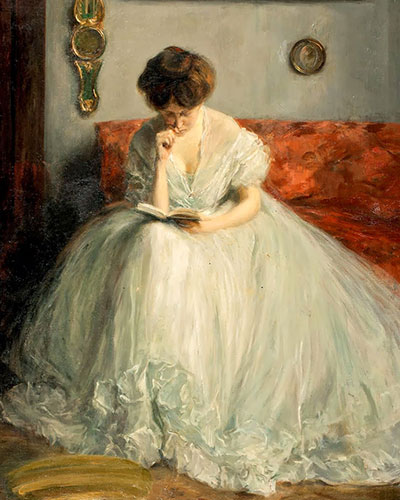

Many years ago, I wrote Content at Home Amid the Tyranny of Change. In that post, I mentioned three well-known writers who were homebodies and didn’t like change all that much (C.S. Lewis, Laura Ingalls Wilder, and Elisabeth Elliot).
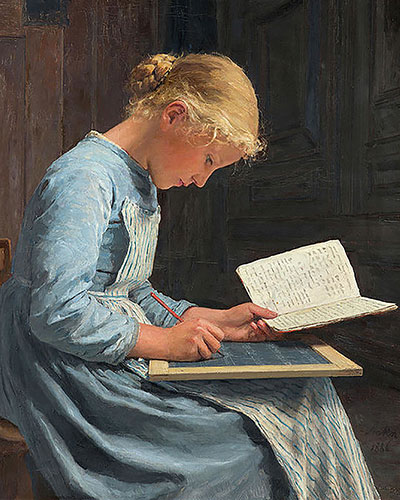
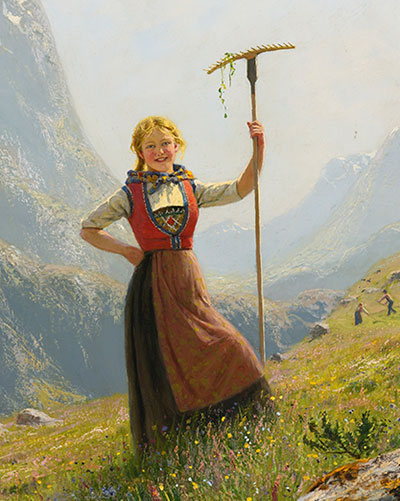
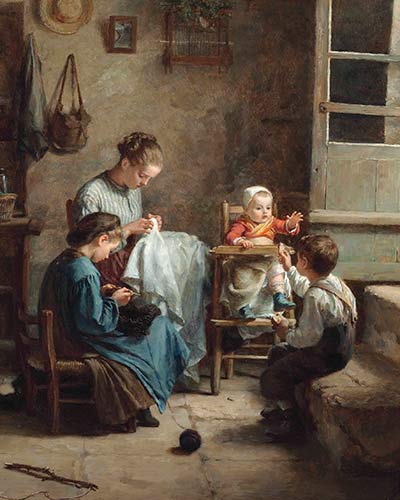
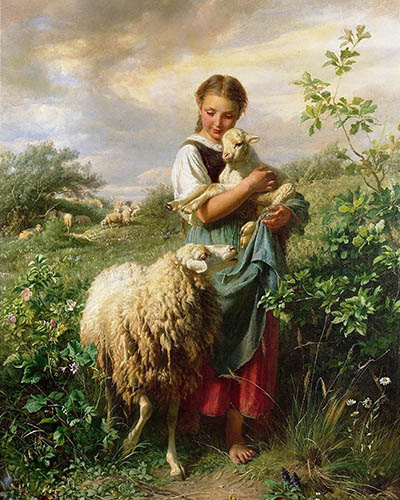
I was reflecting again recently on the propensity some people have to be homebodies and how it is almost always discouraged. I was specifically thinking about how children and teens today aren’t allowed to be homebodies.
Some Children Need Homebody Freedom
From the time they are little, children are expected to socialize and go do things. In our crazy world of college admissions, tweens and teens are pushed to participate in a truly ridiculous number of activities, sports, jobs, and volunteer positions.
What of the quiet bookish homebodies who truly love their own thoughts at home? What of the gifted creative types who do best with long periods of uninterrupted time? Do they know that some of the great people of history were also happy homebodies just like them?
Discovering Famous Homebodies
I decided to dig for more famous homebodies and compile a list of writers, theologians, artists, statesmen, inventors, and musicians who all loved doing their own thing at home. What I ended up with was a who’s who of giants in their respective fields. These are men and women we greatly admire for their incredible skills.
And yet we are reluctant to allow our children (or ourselves) the same quiet and focused life of creativity.
So maybe it’s time to reframe how we look at this. The most profound minds are not always the loudest. History is filled with brilliant individuals who understood that true creativity, scholarship, and contentment often flourish in the quiet, fertile soil of a beloved home. Because of this, they carefully and deliberately guarded their time and freedom. These are people whose life stories are that of a focused dedication to something they truly loved. And they accomplished it in their very own library, garden, or study at home.
Celebrating the Homebodies
So let’s take a look at over 20 gifted homebodies who gave so much to the world.
Margaret Wise Brown
We’ve all read Goodnight Moon so many times! The author of the classic bedtime story had a whimsical and creative spirit, but she was fundamentally a homebody. Her most enduring work is a litany of farewells to the objects in a “great green room,” celebrating the safety and peace of a child’s own home.
Emily Brontë
Even more of a homebody than her sisters, Emily was profoundly attached to the Yorkshire moors and the parsonage at Haworth. She was notoriously shy and reclusive, refusing almost all social engagements. Her entire world—the wild, passionate, and stormy world of Wuthering Heights—was conjured from the landscape she gazed upon from her window and the depths of her own powerful imagination.
John Bunyan
While an itinerant preacher, Bunyan’s most famous work, The Pilgrim’s Progress, was conceived and written during a 12-year imprisonment for preaching without a license. In that cell, his imagination soared, creating the definitive allegory of the Christian life. His experience shows how God can use forced seclusion to produce eternal fruit.
Frederic Chopin
The poet of the piano was famously frail and introverted. He preferred the salons of Paris to large concert halls and was most at ease in the company of a small circle of friends. Chopin’s most exquisite compositions were intimate, nuanced works meant for smaller, more personal spaces. His genius was nurtured in the quiet, not the crowd.
Agatha Christie
The world’s best-selling novelist rarely gave interviews and preferred the quiet of her homes in Devon and Oxfordshire, surrounded by her family. She was a classic introvert who stored up observations from the world and then retreated to process them into her brilliant stories.
Emily Dickinson
The poet is often considered the archetype of the creative recluse. For the latter half of her life, Dickinson rarely left her family’s home in Amherst, Massachusetts. And yet she wrote nearly 1,800 poems of both depth and originality. Her home and garden were her entire world where she observed creation, love, growth, and death which she then crafted into poetry still loved today.
Kate Greenaway
A Victorian illustrator and writer, Greenaway was a quiet woman who lived with her parents most of her life. Her immensely popular books, such as Under the Window, depicted an idyllic, quaint world of children in dresses and smocks playing in charming cottage gardens. She created a nostalgic, home-centered fantasy that was a direct product of her own quiet, domestic existence.
Russell Hoban
Hoban is most beloved for the Frances books such as Bedtime for Frances. The stories about a little badger and her family are entirely centered on the dramas of home life. Frances must content with a new sibling, being afraid of the dark, and the trials and tribulations of eating your egg. The picture books are masterpieces of understanding the child’s perspective within the family home.
Thomas Jefferson
While a statesman who had to engage in public life, Jefferson’s heart was always at Monticello. He was a classic intellectual homebody who designed, built, and constantly tinkered with his estate. He found his greatest joy in his library, gardens, inventions, and correspondence. He once wrote, “I am never so happy as when I am alone in my library, surrounded by my books.” For him, home was the ultimate workshop for the mind.
C.S. Lewis
The Oxford don and author of The Chronicles of Narnia was a quintessential academic homebody. His world revolved around his college rooms at Oxford (and later Cambridge), the local pub with his close friends (the Inklings), and long country walks. He found immense creative and spiritual fulfillment in the routines of scholarship, conversation, and the familiar landscapes of home. From this quiet life, he built entire universes that still thrill people today.
Arnold Lobel
The creator of the beloved Frog and Toad series was a quiet, gentle man. The stories of Frog and Toad feature two friends living in simple nature-filled homes while doing basic domestic tasks such as baking cookies, raking leaves, and waiting for the mail. Perhaps these are a direct reflection of Lobel’s own appreciation for loyalty, friendship, and the comforts of home life.
John Owen
A towering figure of Puritan Reformed theology, Owen was a prolific writer whose collected works fill over 20 volumes. Much of his writing was done during periods of political turmoil when he was removed from public office. He produced some of the most profound and detailed expositions of Christian doctrine ever written from his home study. His life was one of scholarly retreat, dedicated to mastering the depths of Scripture from his desk.
J. I. Packer
An Anglican Reformed theologian, Packer was the epitome of a scholar’s scholar. While he taught at institutions like Regent College, his monumental work, such as Knowing God, was the product of a lifetime of quiet, disciplined study. He was a man of the library and the desk who is known for his humility and preference for deep, written communication over public spectacle.
Beatrix Potter
Potter found freedom and expression at her family’s holiday home in the Lake District. She was a quiet, observant naturalist and artist. Her success with books such as Peter Rabbit made it possible for her to purchase and retreat to Hill Top Farm where she became a respected sheep farmer and conservationist. She found her world in the fields and hills around her home.
Barbara Pym
While considered a brilliant English novelist who chronicled the quiet lives of vicars, spinsters, and anthropologists in post-war England, Pym’s own uneventful life centered around her home, church, and daily routines. She wrote about the drama in ordinary, domestic life because that was the world she knew and loved best.
R.C. Sproul
A Reformed Presbyterian theologian and founder of Ligonier Ministries, Sproul was, at heart, a teacher who loved his study. Although a gifted public speaker, his real passion was digging into the truths of Scripture and theology in a classroom setting or through his writing. He built a ministry that effectively brought the atmosphere of a serious, scholarly study into the homes of countless Christians.
Nikola Tesla
A quintessential introvert and genius, Tesla was intensely focused on his work to the exclusion of almost all socializing. He lived in hotels for years, making his room his entire world—a laboratory, library, and workshop. His mind was so engrossed in invention that the outside world was a distraction from the cosmos of ideas he explored at home.
Henry David Thoreau
Famous for his time at Walden Pond, Thoreau’s entire experiment was the ultimate expression of being a homebody. He championed a simple, intentional life close to nature, believing that a man’s richness was measured by the things he could afford to let alone. His solitude was a chosen philosophy, not a social deficit.
J.R.R. Tolkien
A close friend of C.S. Lewis, Tolkien was profoundly a homebody. His entire legendarium of Middle-earth was built at his desk in his home in Oxford. He was a devoted family man who found his greatest adventures within the pages of his own creation and the shire-like comfort of his own garden.
A.W. Tozer
A pastor and author within the Christian and Missionary Alliance, Tozer was a man of immense personal discipline. He was famously withdrawn, often spending entire days in prayer and study in a small room at the church or in his home. He had little time for the social aspects of the pastorate, believing his primary calling was to seek God in solitude. His powerful writings on the attributes of God are a direct result of this homebody devotion.
Tasha Tudor
An author and illustrator, Tudor didn’t just prefer being at home; she created a 19th-century world within it. Living in a rustic New England home, she embraced a life of deliberate simplicity focused on gardening, raising corgis, spinning her own wool, and illustrating beloved children’s books. For her, domesticity was not a confinement but a chosen, beautiful art form and a direct connection to a pastoral ideal.
Johannes Vermeer
The Dutch Master spent his entire life in his hometown of Delft and almost all of his paintings are set in interiors, often the same few rooms. He was a master of capturing the transcendent beauty in a sunlit corner, a woman reading a letter, or the quiet concentration of daily life. He didn’t need to travel but rather found infinite depth and light right at home.
Grant Wood
The American painter best known for American Gothic was deeply attached to his native Iowa. He was a leader of the Regionalist movement which championed rural American themes. He believed an artist must have “a real, firsthand knowledge of his subject” and found his greatness by focusing intensely on the people and landscapes of his home region, not by chasing trends elsewhere.
Enjoy Being a Homebody
So if you are a creative homebody, you are in exceptional company. And if you are the parent of a homebody, consider how you might best steward that child’s personality and gifts each day.

This post is awesome Sally! Thank you.
I come from a slightly different version of homebody. I thrive from those of you that are the creatives. As a creative, all of you make available the best of the best….writings, paintings, music, ideas, ect. and people like myself draw from these things. I am grateful.
Hi Birdie!
You’re welcome. Glad to see you here!
We were discussing in the car the other day the idea of “types” of people. I mentioned to Caroline that David wasn’t my “type” I thought I would marry. I never would have thought of marrying an artist. Art was my least favorite class. LOL! I had friends in college who took Art History and that idea was completely foreign to me.
Yet I married an artist and am mothering an artist. It’s really changed the way I see the world for the better in so many ways. So they are both the “type” God thought I needed in my life.
Sallie