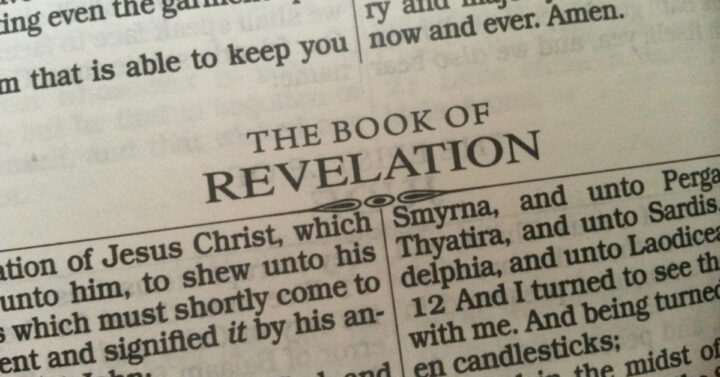
Christians trust the people who translate the Bible. How would it make you feel to discover that these Bible translators systematically and deliberately leave out a crucial word (melló) over and over again in the New Testament? What if leaving this word out completely changes how you might understand passages about the End of the Age (so-called “End Times”)?
The discussion is over this:
Strong’s Greek: 3195. μέλλω (melló)
Shelly and Kristin both address this issue of melló in the videos below. If you only have time for one, watch the first one. But both are worth your time or I wouldn’t include them.
As you will see below, there is no dispute over what melló means. It’s not obscure. Translators don’t struggle to understand it. They know exactly what melló means. It appears over 100 times in the New Testament.
melló means “about to”
That’s what makes this situation with melló so disturbing.
People are convinced they are reading the Bible correctly, but how can they be if a major word is consistently and methodically left out but only in certain passages? And what happens when putting that word in completely changes the meaning of the sentence?
Shelly writes:
Bible translators started out with noble intentions. The question is, why then, did they choose to omit words that didn’t fit their eschatology? Christians, this should bother you.
Kristen writes:
Translation conspiracy in the New Testament?
This should bother us. Greatly.
Never forget the power of the Theologically Trapped By Denominational Confessions and Creeds. These translators appear to be more committed to their own theological biases than they are the simple, straight-forward truth.
If you have another explanation, I’d love to hear it because I can’t think of any other reason this would be done so systematically.
If we want to be blunt, it is lying by omission.
Additional Reading:
- More Translation Frustration from American Vision
- How Should the Greek Word ‘Mello” be Translated? from American Vision
- What Does Mello Mean in Acts 24:15? from American Vision
- What Must be Proved When Mello is Used? from American Vision
- Bias in Translation: Mello (PDF) from Preterist Papers

The problem is you are using Strong’s, a truncated dictionary that is over a hundred years old. It is incomplete by today’s standards. No serious Greek scholar relies on it anymore.
μέλλω has more than one meaning, like to be inevitable, destined.
It also simply denotes in the indefinite future, “to come” See e.g. Matt 12:32; Ephesians 1:21; 1 Timothy 4:8 and yes, Matt 3:7.
No “conspiracy,” — your tools simply are inadequate.
Kindly suggest if you are going to publicly handle the Word of God that you make sure you are up to date in your Greek studies.
Here is the most accurate and authoritative NT Lexicon available in 2026: “BDAG”.
A Greek-English Lexicon of the New Testament and Other Early Christian Literature, 3rd Edition
Did you watch either of the videos?
Yes. Not impressed.
Neither would anyone else be who actually knows Greek.
There is an agenda at work in them, not a search for truth.
If you reject what I wrote then why not refute what I wrote? Or at least engage with it. I was trying to be helpful.
In what way did I reject what you wrote? I approved your comment and simply asked if you had watched the videos.
I didn’t engage with your comment because I’ve spent most of my day homeschooling.
I don’t get the sense you really want to help, but rather try to embarrass me or put me in my place. Your condescending tone toward me and the women in the videos has come through loud and clear.