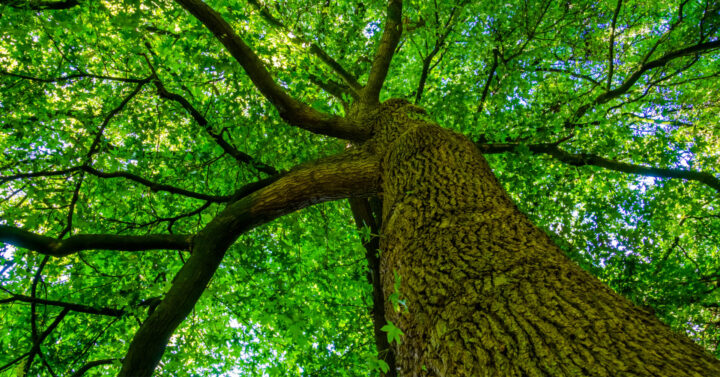
This Arbor Day unit study gives homeschool families an easy way to learn about trees, Julius Sterling Morton, Nebraska history, poetry, geography, nature study, and simple spring activities.
You can use these Arbor Day activities for one afternoon, a full day of learning, or a week-long spring unit study. Arbor Day is celebrated on the last Friday in April each year, but this study also works beautifully any time you want to study trees with your children.
Arbor Day Unit Study Quick Start
Best for: Elementary and middle school
Time needed: One day to one week
Subjects included: Science, history, geography, language arts, handwriting, poetry, art, and nature study
Main topics: Trees, Arbor Day, Julius Sterling Morton, Nebraska, conservation, and stewardship
Recommended printables: Arbor Day KWL, Arbor Day Word Search, Tree Fun Fact Cards, Trees Copywork, Nebraska Map Printable, and tree poetry printables
Free Arbor Day KWL Chart
A simple KWL chart is a helpful way to begin your Arbor Day unit study. Children can record what they already know, what they want to know, and what they learned during the study.
Download the free Arbor Day KWL chart here.
If you are new to using KWL charts, you may also find this helpful: Using a KWL Chart in Your Homeschool Unit Study.
What Is Arbor Day?
Arbor Day is a day set aside to recognize the importance of trees and to encourage people to plant and care for them. It is celebrated in the United States on the last Friday of April each year.
For homeschool families, Arbor Day is a lovely spring study because it connects so many things children can see and touch: shade, fruit, bark, leaves, roots, birds’ nests, lumber, paper, and the changing seasons.
It is also a great way to talk about stewardship. Trees are not merely “resources.” They are part of the created world, and learning to notice and care for them can help children become more attentive, grateful, and responsible.
Who Was Julius Sterling Morton?
Arbor Day began with Julius Sterling Morton, a New Yorker who moved with his wife, Caroline, to the Nebraska Territory in the 1850s. They settled on land that had very few trees, and Morton began planting many varieties on his homestead.
Morton loved trees and used his influence as a newspaper editor and public speaker to encourage others to plant them. His efforts eventually led to the first Arbor Day celebration in Nebraska.
You can learn more about Julius Sterling Morton and the history of Arbor Day in this article from The Old Farmer’s Almanac.
You may also want to explore the websites for Arbor Lodge State Historical Park and Arbor Lodge State Historical Park & Mansion.
Arbor Day Unit Study Activities
Use the following Arbor Day activities to build a simple study for your homeschool. You can choose just a few or combine them into a fuller unit study.
History: Learn About Julius Sterling Morton
Read about Julius Sterling Morton and discuss why trees would have mattered so much to settlers in Nebraska. Talk about how one person’s love for trees helped create a national day of planting and remembrance.
Possible discussion questions:
- Why were trees important to settlers?
- What kinds of problems might people have faced in a treeless area?
- How did Julius Sterling Morton encourage other people to plant trees?
- Why do we still celebrate Arbor Day today?
Geography: Map Nebraska
Use a Nebraska map printable to locate important places related to Arbor Day, including Nebraska City and Arbor Lodge.
You can also use a U.S. map and ask your child to label surrounding states, major rivers, or the capital of Nebraska.
Science: Study Trees
Trees offer many possibilities for a spring science study. Children can learn about roots, trunks, branches, leaves, seeds, fruit, bark, photosynthesis, habitats, and the role trees play in the environment.
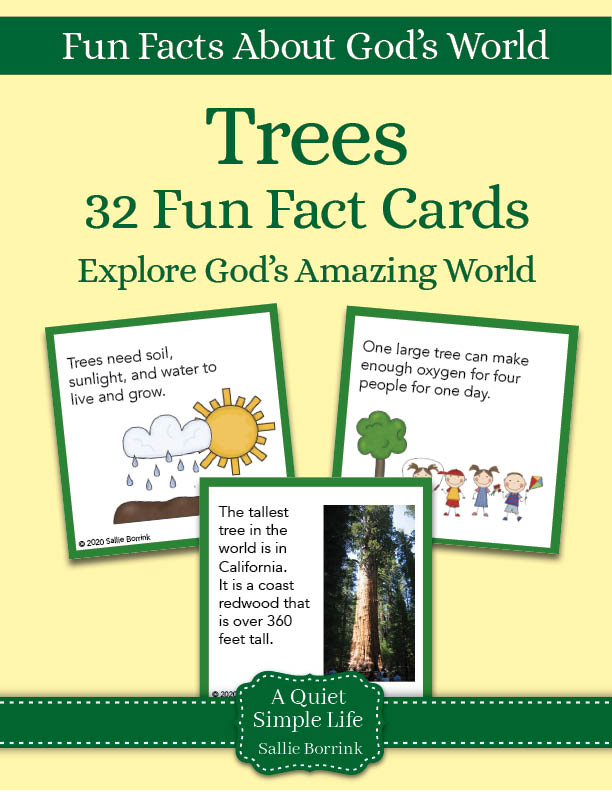
My Trees Fun Fact Cards are an easy way to add science facts and discussion to your Arbor Day unit study.
Language Arts: Add Tree Vocabulary
Use my free Arbor Day word search to introduce or review vocabulary related to Arbor Day and trees.
You can also have your child choose several words from the word search and use them in sentences or a short paragraph about Arbor Day.
Handwriting: Practice with Tree Copywork
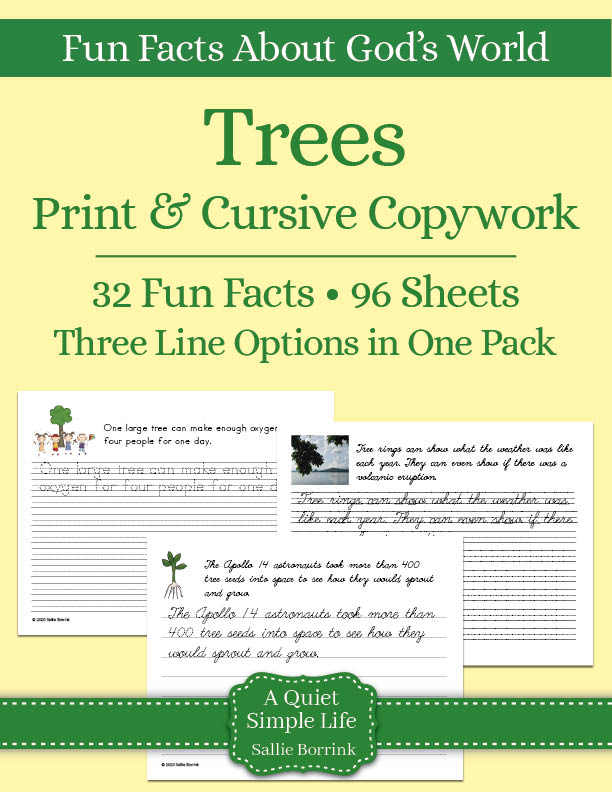
Combine handwriting practice with nature study using Trees Copywork – Print & Cursive.
This is an easy way to include language arts without adding a complicated assignment. Children can practice handwriting while learning interesting facts about trees.
Poetry: Read Tree Poems
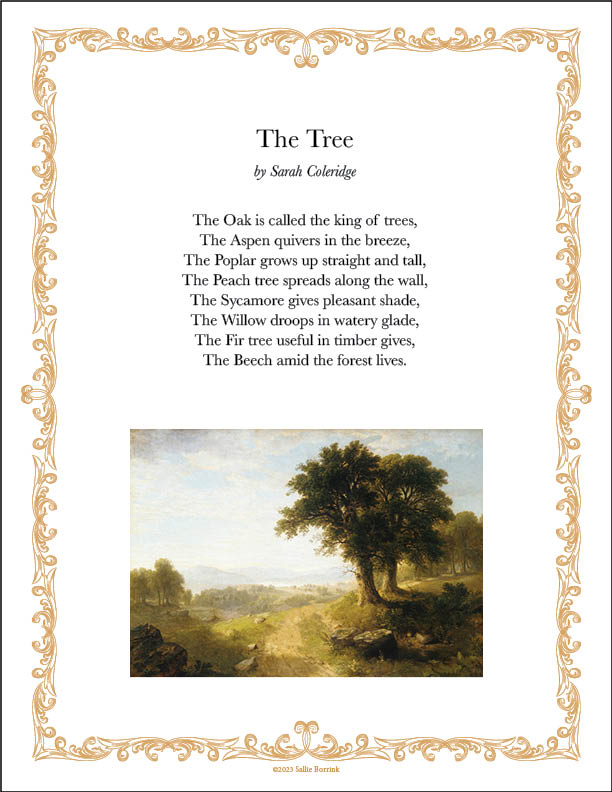
Poetry is a natural companion to an Arbor Day unit study. Read and discuss one or both of these tree poems:
After reading, ask:
- What does the poet notice about trees?
- What words or phrases stand out?
- How does the poem make trees seem beautiful, strong, useful, or alive?
- What tree would you choose to write about?
Nature Study: Observe a Tree
Choose one tree in your yard, neighborhood, park, or nature area. Spend time observing it closely.
Have your child notice:
- the shape of the tree
- the bark texture
- the leaves or needles
- buds, blossoms, fruit, seeds, or cones
- birds, insects, or animals using the tree
- the shade the tree provides
Children can sketch the tree, write a description, take photographs, or return to the same tree in different seasons.
Art: Sketch or Paint a Tree
Take your favorite art supplies outside and draw or paint a tree from life. Encourage your child to slow down and really look before beginning.
Younger children can draw the whole tree. Older children may enjoy focusing on one part, such as bark, leaves, roots, or a branch.
Art and History: Design an Arbor Day Postage Stamp
Have your child design a postage stamp in honor of Arbor Day or Julius Sterling Morton. You can use my Design a Postage Stamp Worksheets for this activity.
Possible stamp themes:
- Julius Sterling Morton
- Arbor Lodge
- a child planting a tree
- a favorite tree
- the state of Nebraska
- the words “Plant a Tree”
Hands-On Activity: Plant or Care for a Tree
If possible, visit a local nursery and purchase a tree to plant at home. If planting a tree is not practical, choose another way to care for trees in your area.
Simple ideas include:
- watering a young tree
- adding mulch around a tree
- picking up litter near trees
- learning to identify trees in your yard
- visiting an arboretum, park, or nature center
Research: Why Are Trees Important?
Have your child research the importance of trees and create a “Trees Are Important” collage. He can draw or cut out pictures of things that come from trees or depend on trees.
Ideas to include:
- fruit
- nuts
- paper
- wood
- shade
- oxygen
- bird nests
- animal habitats
- maple syrup
- beauty in each season
Shop This Arbor Day Unit Study
Make your Arbor Day study easier with ready-to-print resources from my shop.
- Free Arbor Day KWL Chart — begin the study by recording what your child knows, wants to know, and learns.
- Free Arbor Day Word Search — simple vocabulary practice for Arbor Day.
- Trees Fun Fact Cards — use for science discussion, narration, copywork prompts, or a nature table.
- Trees Copywork – Print & Cursive — handwriting practice with tree facts.
- Nebraska Map Printable — add geography to your study of Julius Sterling Morton and Arbor Day.
- “The Tree” by Sarah Coleridge Printable — poetry for your tree study.
- “Trees” by Joyce Kilmer Printable — a classic poem to include in an Arbor Day study.
- Design a Postage Stamp Worksheets — use for an Arbor Day or Julius Sterling Morton art activity.
Related Homeschool Ideas
If your children enjoy this Arbor Day unit study, you may also want to plan additional nature studies around trees, birds, flowers, weather, gardens, or seasonal changes.
Arbor Day pairs especially well with spring nature study, gardening, poetry, and state geography.
Arbor Day Unit Study FAQ
When is Arbor Day celebrated?
- Arbor Day is celebrated on the last Friday in April in the United States.
What can children learn in an Arbor Day unit study?
- Children can learn about trees, Julius Sterling Morton, Nebraska history, nature study, conservation, poetry, geography, handwriting, and art.
What subjects can be included in an Arbor Day?
- An Arbor Day unit study can include science, history, geography, language arts, poetry, handwriting, art, research, and nature study.
How long should an Arbor Day unit study take?
- You can complete a simple Arbor Day study in one afternoon or expand it into a week-long spring unit study.
What are some simple Arbor Day activities for kids?
- Simple Arbor Day activities include planting a tree, observing a tree, reading tree poems, completing an Arbor Day word search, learning about Julius Sterling Morton, mapping Nebraska, and making a tree collage.
Happy Arbor Day!

Leave a Reply