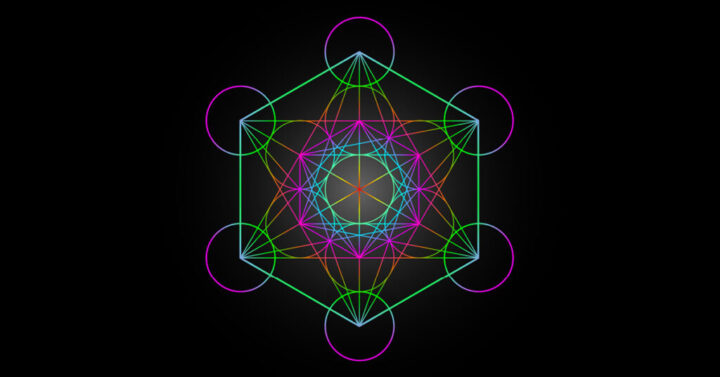
The idea of Metatron has been popping up and I decided to do a bit of a dive into it. In the interest of time, I asked four different AI engines (Ayra, Chat GPT, Perplexity, and Grok) to explain it to me. I gave all four the same prompt. I then followed up with another question about sacred geometry since that term is often brought up in relation to Metatron.
The AI were fairly consistent in what they shared although they approach the questions a bit differently (because all AI are biased in various ways). I’ve inserted their answers below and have not edited them at all.
I also inserted a video at the end of the post. I haven’t had time to watch it although I am familiar with her channel. You can choose to do with it as you wish.
Lastly, I offer a few closing thoughts at the end.
Who or What is Metatron in the Christian Faith?
Here are my two questions:
- Explain Metatron to me in less than 1000 words from an orthodox/historical Christian perspective.
- How is the idea of Metatron related to sacred geometry? What is the Christian view of sacred geometry?
Arya
Arya gave the shortest answers so I’ll start with that. It is also the AI that is most conservative leaning compared to all the rest.
Metatron from an Orthodox/Historical Christian Perspective
Metatron is a figure mentioned in certain Jewish mystical texts (like the Talmud and 3 Enoch), but he is not recognized in orthodox Christian theology. From a traditional Christian perspective, Metatron is not part of Scripture, Church tradition, or the teachings of the early Church Fathers.
Key Points on Metatron from a Christian View:
- Not Biblical – The name “Metatron” never appears in the Bible. Some Jewish mystics identify him as Enoch transformed into an angel (based on 3 Enoch), but Christianity rejects this as extrabiblical speculation.
- Potential Heretical Associations – Some Gnostic and Kabbalistic traditions elevate Metatron to a divine or semi-divine status, which conflicts with Christian monotheism and the uniqueness of Christ (Colossians 1:15-20).
- No Church Tradition – The early Church Fathers, ecumenical councils, and historic Christian creeds never mention Metatron. If he were significant to Christian doctrine, he would have been addressed by figures like Augustine, Jerome, or Aquinas.
- Possible Connection to Fallen Angels – Some Christian scholars (like Origen) warned against excessive angelology, as it could lead to dangerous mysticism or even Satanic deception (Colossians 2:18).
- Christ as the Only Mediator – Christianity teaches that Jesus alone is the mediator between God and man (1 Timothy 2:5). Any figure claiming to be a heavenly mediator (like Metatron in some traditions) contradicts this truth.
Conclusion:
Metatron is a product of Jewish mysticism, not Christian revelation. Orthodox Christianity rejects his veneration or theological significance, as it lacks scriptural and historical foundation. Christians should focus on Christ, the angels named in Scripture (Michael, Gabriel), and avoid esoteric angelology that strays from biblical truth.
Metatron and Sacred Geometry: The Christian View
Metatron and Sacred Geometry
In Jewish mysticism (Kabbalah) and esoteric traditions, Metatron is sometimes associated with sacred geometry, particularly the Metatron’s Cube—a complex geometric figure derived from the Flower of Life. This symbol is said to represent the structure of the universe, divine order, and the connection between the spiritual and physical realms.
- Metatron’s Cube contains all five Platonic solids, which some mystics believe correspond to the elements and the fabric of creation.
- Some occultists and New Age practitioners use it for meditation, energy work, or as a “portal” to higher consciousness.
Christian View of Sacred Geometry
Christianity has a mixed perspective on sacred geometry:
- Biblical Use of Symbolic Geometry – The Bible contains geometric symbolism (e.g., the Temple of Solomon with its precise measurements, the New Jerusalem described as a cube in Revelation 21:16). However, these are symbolic, not mystical.
- Rejection of Occult Geometry – The Church Fathers condemned pagan and Gnostic use of geometry for divination or magic (e.g., numerology, astrology). Sacred geometry tied to Metatron, Kabbalah, or the Flower of Life is seen as occult and incompatible with Christianity.
- God as the Divine Architect – Some medieval Christian scholars (like Hildegard of Bingen) saw geometric harmony in creation as evidence of God’s design—but not as a means to manipulate spiritual forces.
- Warning Against Esoteric Symbolism – Christianity rejects the idea that geometric shapes hold inherent power or secret knowledge (Colossians 2:8). The focus is on Christ, not hidden patterns.
Conclusion
While geometry can reflect God’s order, Christianity rejects sacred geometry tied to Metatron or occult traditions. The Bible warns against seeking hidden knowledge outside of Christ (Deuteronomy 18:10-12). True spiritual insight comes from Scripture, not geometric mysticism.
Chat GPT
Here are the answers provided by Chat GPT.
Metatron: An Orthodox/Historical Christian Perspective
Metatron does not appear in the canonical Christian Scriptures and is not recognized in authoritative Christian theology. The figure of Metatron primarily arises in later Jewish mystical literature, especially the Talmud, Midrash, and Kabbalah.
Origins in Jewish Tradition
- Jewish sources: Metatron is described as a powerful angelic being, often called the “scribe of heaven” or “the lesser YHWH.” He is especially prominent in sources like 3 Enoch (an early medieval Jewish mystical text) and other post-biblical writings.
- He is sometimes identified with the biblical Enoch, whom God “took” (Genesis 5:24). Certain Jewish texts say Enoch was transformed into Metatron after his ascension to heaven.
Christian Perspective
- Canonical Silence:
- The name “Metatron” and his functions are never mentioned in the Old or New Testament.
- The Bible depicts only a few archangels (like Michael and Gabriel) and never assigns anyone Enoch’s supposed posthumous role.
- Canonical Christian Scripture does not support the idea of humans becoming heavenly rulers equal to, or second only to God.
- Doctrine of Angels:
- Orthodox Christian doctrine holds that angels are spiritual messengers created by God, distinct from humans.
- There is no scriptural or patristic teaching that any human becomes the “highest of angels” or a “lesser God” (as some Kabbalistic texts say of Metatron).
- Non-Canonical Sources:
- Some Christian apocryphal texts are influenced by Jewish pseudepigrapha, but the figure of Metatron never became part of the Christian canon or mainstream doctrine.
- Some early Christian sects and Gnostics used similar mystical texts, but the historic, orthodox branches of Christianity (Eastern Orthodox, Roman Catholic, and the historic Protestant churches) reject these views.
- Theological Concerns:
- Orthodox Christianity opposes the idea of intermediaries between God and humanity except for Christ himself (“For there is one God and one mediator between God and mankind, the man Christ Jesus” – 1 Timothy 2:5).
- Promoting a “super angel” or semi-divine figure like Metatron undermines orthodox Christology and the doctrine of salvation.
Summary Table
Jewish Mysticism Orthodox Christianity Metatron as Enoch/angel No mention or recognition of Metatron “Lesser YHWH”, scribe Only Michael and Gabriel have scriptural prominence Angel/human mixture Humans and angels are distinct orders (see Hebrews 2:6–8) Intermediary between God and man Christ alone is mediator Conclusion
Metatron is a figure of post-biblical Jewish mysticism that does not appear in Christian Scripture or orthodox tradition. From a historical/orthodox Christian perspective, belief in Metatron is neither scriptural nor doctrinally acceptable.
In short: Metatron is exclusively a late Jewish mystical construct; there is no basis for his existence, role, or veneration in orthodox/historical Christianity.
Metatron and Sacred Geometry
1. Metatron’s Relationship to Sacred Geometry
Metatron is connected to “Sacred Geometry” only in esoteric, mystical, and New Age circles, not in mainstream Jewish or Christian tradition.
- Metatron’s Cube: In Kabbalistic mysticism (especially as developed during the Renaissance and in Hermetic traditions), “Metatron’s Cube” is a geometric figure made of 13 equal circles connected by lines. It is derived from the “Fruit of Life” pattern (itself part of the “Flower of Life” motif).
- Symbolism: Esoteric traditions claim this cube represents the underlying geometric blueprint of the universe or the order of creation.
- Association: Metatron, seen as a “scribe” or “architect” of heaven in these traditions, is thus linked to this geometric form.
Important: These associations are not found in the Bible (Jewish or Christian), nor in early Christian or mainstream Jewish teaching, but are part of later Jewish mysticism, Renaissance Hermeticism, and modern New Age beliefs.
2. Christian View of Sacred Geometry
Sacred Geometry is the belief that certain shapes and ratios have spiritual or mystical power, often thought to represent creation’s divine order.
Orthodox Christian Perspective
- God as Creator of Order: Christianity affirms God created the universe with beauty and mathematical order (Psalms 19:1). Early Christians marveled at this, seeing it as a sign of divine intelligence.
- Use in Christian Art: Geometric patterns are found in church art and architecture (e.g., rose windows, iconography), but these are for aesthetic or symbolic purposes, not mystical power.
- No Magical or Spiritual Power: Historic Christianity does not teach that shapes or numbers have innate mystical influence or act as channels to God.
- No Biblical Basis: The Bible never assigns mystical or spiritual significance to specific shapes or proportions as a conduit to divine reality.
- Warning Against Occultism: Christianity warns against seeking spiritual power or divine revelation through symbols, patterns, or esoteric systems (Deut 18:10-12; Colossians 2:8-9).
Summary Table
Sacred Geometry in Esoteric Traditions Orthodox Christianity Metatron’s Cube, mystical meanings No such figure/doctrine Symbols/shapes as spiritual tools Symbols for beauty, not magic/power Patterns have occult/magical power Rejects concept of mystical geometry Esoteric access to “divine” Revelation comes through Christ and Scripture In Summary
Metatron’s link to sacred geometry is not Christian but emerges from later Kabbalistic and esoteric sources.
Christianity affirms God’s order in creation but does not teach or accept sacred geometry as a spiritual or mystical path.
No shapes or esoteric symbols (including “Metatron’s Cube”) are part of orthodox Christian doctrine or practice.
Perplexity
I am less familiar with this AI which is one of the reasons I decided to use it. I wanted to see how its answers compared to the other three I’m more familiar with.
Metatron: Overview from an Orthodox/Historical Christian Perspective
Who is Metatron?
Metatron is a figure prominent in post-biblical Jewish mysticism, particularly in the mystical texts of the Kabbalah and some later apocryphal literature. He is often described as a powerful angelic being, sometimes identified as the transformed patriarch Enoch, who becomes a celestial scribe and mediator between God and humanity. However, Metatron is not mentioned anywhere in the canonical Christian Scriptures—the Old Testament or New Testament.Origins and Development
- Jewish Roots: The concept of Metatron arises mainly in later Jewish mystical writings such as 3 Enoch and the Zohar, rather than in the Hebrew Bible or early Christian texts.
- Enoch Connection: According to these texts, Metatron was originally the biblical Enoch, who was taken up to heaven without dying and transformed into the highest of angels, given access to God’s presence, and the role of celestial scribe. This narrative does not originate from the Bible but from extra-biblical Jewish tradition.
Roles Attributed to Metatron
- Celestial Scribe: Metatron is described as recorder of the Book of Life, tracking the deeds and decisions of human and divine beings.
- Mediator/Guide: He is portrayed as a guide for humanity and a mediator between God and His people, sometimes even as the angel who led the Israelites through the wilderness in Exodus (though there is no biblical text naming him as such).
- Prince of the Presence: Metatron is given titles such as “Prince of the Presence,” indicating his supposed proximity to God’s throne and unique privileges in heaven.
Christian Canon and Orthodox Doctrine
- Not in Canonical Scriptures: Metatron is entirely absent from the Christian Bible. Neither the Old nor New Testament names Metatron, nor do they ascribe any of his attributes to known angels.
- No Role in Christian Angelology: In orthodox Christian doctrine, only a few angels are named (e.g., Michael, Gabriel), and Metatron is not among them. The role of “mediator” between God and humanity is explicitly and uniquely assigned to Jesus Christ (1 Timothy 2:5).
- Focus on Christ: The core of historical Christian belief centers on the unique mediatorship, sacrifice, and resurrection of Jesus Christ—not any angelic intermediary. Orthodox Christianity thus does not recognize Metatron in any theological or liturgical sense.
Summary Table
Metatron in Jewish Mysticism Metatron in Orthodox/Historical Christianity Transformed version of Enoch Not recognized or mentioned Celestial scribe, mediator, guide Jesus alone is mediator (1 Timothy 2:5) Appears in 3 Enoch, Kabbalah, later texts Absent from canonical Scripture Holds unique privileges in heaven No such figure in established doctrine Conclusion
From an orthodox and historical Christian perspective, Metatron is not a figure of theological importance or biblical authority. His origins lie in Jewish mysticism and apocryphal literature after the biblical period. Christianity’s authoritative texts neither mention him nor assign him any role; instead, Christian doctrine focuses solely on Christ as the mediator between God and humanity and does not allow for angelic beings to occupy the roles ascribed to Metatron in non-Christian texts.
Metatron and Sacred Geometry
Metatron’s relationship to sacred geometry is primarily found in mystical and esoteric traditions, especially within post-biblical Jewish mysticism and popular New Age spirituality. The central symbol connecting Metatron to sacred geometry is “Metatron’s Cube,” a geometric figure derived from the “Flower of Life,” which consists of 13 interconnected circles. Within this cube, all five Platonic solids can be found, symbolizing the underlying patterns of creation and the universe.
Metatron’s Cube is believed to represent how divine or creative energy flows through the universe. In these traditions, Metatron is viewed as the angel who oversees this flow, acting as a celestial scribe and maintaining the structure and balance of creation. The cube is used as a meditative tool, allowing individuals to contemplate the interconnectedness of all things and to seek spiritual transformation, often associated with Metatron’s guidance.
Christian View of Sacred Geometry
Traditional and orthodox Christianity does not incorporate the concept of Metatron or assign spiritual significance to Metatron’s Cube or similar geometric symbols. These ideas developed outside biblical canon and orthodox Christian doctrine.
Regarding sacred geometry in general, Christianity historically recognizes that the created world has order, structure, and beauty. For example, many church buildings, especially cathedrals, use geometric patterns and symmetry to reflect the harmony of God’s creation. However, the theological significance is not placed on the geometry itself, but rather on the beauty it brings to worship and its capacity to lift the mind towards God. Geometry is appreciated as a reflection of God’s wisdom as creator—not as a means to hidden spiritual power or esoteric knowledge.
Christian doctrine is wary of ascribing mystical or salvific significance to objects, symbols, or patterns unless explicitly rooted in Scripture and apostolic tradition. Most forms of sacred geometry, especially those associated with Metatron, are seen as outside or even contrary to Christian teaching, since salvation, spiritual transformation, and divine mediation are understood to come solely through Christ, not through angels or esoteric symbols.
Summary Table
Concept Esoteric/Metatron View Orthodox Christian View Metatron Angel overseeing cosmic energy, linked to geometry Not recognized, absent from doctrine Sacred Geometry Symbols like Metatron’s Cube hold spiritual meaning, aid in meditation and transformation Geometry seen as a reflection of creation’s order and beauty, not a path to spiritual power Metatron’s Cube Central tool for understanding creation No place in Christian doctrine or practice Conclusion
The connection between Metatron and sacred geometry is rooted in mystical and esoteric traditions, not in orthodox Christian faith. Christianity may appreciate the use of geometry in art and architecture, but does not grant it spiritual or salvific power, nor does it recognize Metatron as an angelic mediator or figure of worship.
Grok
Grok uses a lot of longer text. I put it last for that reason.
Explaining Metatron from an Orthodox/Historical Christian Perspective
Metatron, as a concept, is not a figure recognized or discussed within orthodox or historical Christianity in the way it appears in certain Jewish mystical traditions or later esoteric and occult literature. From an orthodox Christian perspective, rooted in the canonical Scriptures and the teachings of the early Church Fathers, the idea of Metatron as an angelic being or a divine intermediary does not hold a place in traditional theology or doctrine. However, I will explain the origins of the concept, its lack of presence in Christian orthodoxy, and the historical context surrounding it.
The name “Metatron” is primarily associated with Jewish mysticism, particularly in texts like the Talmud, the Merkabah literature, and the Kabbalistic tradition. In these sources, Metatron is often described as a powerful angelic figure, sometimes considered the “scribe of heaven” or a mediator between God and humanity. Some texts even suggest that Metatron is the transformed Enoch, the biblical patriarch who “walked with God” and was taken up to heaven without dying (Genesis 5:24). This idea likely stems from later Jewish interpretations found in works like the Book of Enoch (a non-canonical text), where Enoch is elevated to a high status in the heavenly realm.
From a historical Christian perspective, the concept of Metatron is absent from the canonical Bible (both Old and New Testaments) and the writings of the early Church. Orthodox Christianity adheres strictly to the revealed Scriptures and the teachings of the ecumenical councils, which do not mention or endorse any figure named Metatron. The Christian understanding of angels is based on biblical references to figures like Michael and Gabriel, who are explicitly named in Scripture (e.g., Daniel 10:13, Luke 1:26-38). Angels in Christian theology are created beings, messengers of God, and are not to be worshipped or seen as divine intermediaries in the way Christ is (Hebrews 1:1-14). The idea of a singular angelic figure like Metatron acting as a scribe or quasi-divine entity conflicts with the Christian emphasis on Christ as the sole mediator between God and humanity (1 Timothy 2:5).
Historically, the early Church was cautious about speculative or mystical ideas concerning angels and the heavenly hierarchy that went beyond Scripture. The Church Fathers, such as Augustine and Athanasius, focused on the centrality of Christ and warned against undue fascination with angelic beings or apocryphal texts. The Book of Enoch, while influential in some early Jewish and Christian circles, was not included in the canon of Scripture by either the Jewish or Christian traditions (with the exception of the Ethiopian Orthodox Church). Thus, any ideas about Enoch’s transformation into Metatron, as found in later Jewish mysticism, were not incorporated into mainstream Christian thought.
During the medieval period, as Jewish Kabbalistic ideas developed and spread, some Christian scholars and mystics encountered the concept of Metatron through interfaith dialogue or study of Jewish texts. However, within orthodox Christianity, such ideas were generally viewed with suspicion or outright rejection, as they were seen as extraneous to biblical revelation. The Church historically sought to guard against syncretism or the blending of non-Christian ideas into its theology. For instance, the Second Council of Nicaea (787 AD) and other ecclesiastical rulings emphasized the importance of adhering to apostolic tradition and Scripture over speculative or foreign teachings.
In summary, from an orthodox and historical Christian perspective, Metatron is not a recognized or relevant figure. The concept belongs to Jewish mystical traditions that developed outside the scope of Christian theology. Orthodox Christianity focuses on the Triune God—Father, Son, and Holy Spirit—and the mediation of Christ, leaving no theological space for a figure like Metatron. While some modern esoteric or New Age movements may incorporate Metatron into a broader spiritual framework, these interpretations are far removed from historical Christian doctrine. For Christians seeking to understand angels or heavenly beings, the Bible and the teachings of the Church provide the authoritative foundation, emphasizing worship of God alone and reliance on Christ as the ultimate revelation of divine truth.
Metatron, Sacred Geometry, and the Christian View
Metatron and Sacred Geometry
The concept of Metatron, primarily rooted in Jewish mysticism and later esoteric traditions, is often associated with sacred geometry through a specific geometric figure known as “Metatron’s Cube.” While Metatron itself is not a figure in orthodox Christian theology (as discussed previously), the idea of Metatron’s Cube has gained prominence in modern spiritual and New Age circles. Here’s how the connection is understood:
- Metatron in Mystical Traditions: In Jewish Kabbalistic texts, Metatron is sometimes depicted as a high-ranking angel or heavenly scribe, associated with divine order and the structure of the cosmos. This connection to cosmic order likely contributed to the later association of Metatron with geometric patterns that symbolize universal harmony.
- Metatron’s Cube: This geometric figure is a complex design composed of 13 circles arranged in a symmetrical pattern, with lines connecting their centers to form a two-dimensional representation of interconnected shapes, including the five Platonic solids (tetrahedron, cube, octahedron, dodecahedron, and icosahedron). These solids are often linked to the fundamental elements and the structure of the universe in ancient and esoteric thought. Metatron’s Cube is said to represent the blueprint of creation, embodying balance, harmony, and the interconnectedness of all things. It is named after Metatron due to the angel’s supposed role as a guardian of divine knowledge and cosmic order in mystical traditions.
- Origins of the Association: The specific link between Metatron and this geometric figure is not found in ancient Jewish texts like the Talmud or early Kabbalah but appears to be a later development in medieval or Renaissance esoteric traditions, possibly influenced by the revival of Platonic and Neoplatonic ideas. The name “Metatron’s Cube” likely emerged in more modern occult or spiritual contexts, reflecting a blend of sacred geometry with angelic lore.
In summary, the connection between Metatron and sacred geometry, particularly through Metatron’s Cube, is a symbolic representation of divine order and creation. It is not historically rooted in ancient religious texts but rather in later mystical and esoteric interpretations.
Christian View of Sacred Geometry
From an orthodox and historical Christian perspective, sacred geometry as a concept or practice is not formally recognized or endorsed within mainstream theology. However, Christians have historically engaged with geometry and symbolism in various ways, often through art, architecture, and theology. Below is an overview of the Christian perspective on sacred geometry:
- Absence in Scripture and Doctrine: The Bible and core Christian doctrines do not explicitly mention or advocate for sacred geometry as a spiritual practice or divine principle. Christian theology emphasizes faith in God through Christ, Scripture, and the sacraments, rather than esoteric or geometric systems for understanding the divine. Concepts like Metatron’s Cube or other geometric patterns tied to mystical traditions are outside the scope of canonical Christian teaching.
- Symbolism in Christian Art and Architecture: That said, geometry and symmetry have played significant roles in Christian tradition, particularly in the design of churches, cathedrals, and religious art. For example:
- The use of the circle in halos or rose windows symbolizes eternity and divine perfection.
- The cross, a fundamental Christian symbol, reflects balance and intersection, often designed with proportional harmony.
- Medieval cathedrals, such as Chartres, were constructed using geometric principles to reflect the order and beauty of God’s creation, often incorporating ratios like the Golden Mean, which was associated with divine proportion.
These uses of geometry, however, are generally seen as aesthetic or symbolic tools to glorify God, not as inherently sacred or mystical in themselves.
- Historical Context and Caution: During the early and medieval periods, some Christian thinkers were influenced by Platonic and Neoplatonic ideas, which included notions of geometry as a reflection of divine order (e.g., the works of Augustine or Boethius). However, the Church historically cautioned against over-emphasizing such philosophies if they detracted from biblical revelation or led to syncretism with pagan or esoteric beliefs. The focus remained on Christ as the ultimate revelation of God, rather than on abstract systems like sacred geometry.
- Modern Perspectives: In contemporary times, some Christians, particularly those in more mystical or esoteric circles, may explore sacred geometry as a way to understand God’s creation or as a meditative tool. However, this is not representative of orthodox Christian teaching. Mainstream denominations (Catholic, Protestant, and Eastern Orthodox) generally do not incorporate sacred geometry into their theology or liturgy, viewing it as a human construct rather than a divine mandate. Additionally, associations with figures like Metatron or concepts like Metatron’s Cube are often seen as foreign to Christian tradition, stemming from non-canonical or occult sources.
- Potential Concerns: Orthodox Christianity often expresses concern about practices or beliefs tied to sacred geometry if they are linked to New Age spirituality or occultism, as these may conflict with the exclusivity of Christ as mediator and the sufficiency of Scripture. The Church historically warns against idolatry or attributing divine power to created things, including geometric patterns (Colossians 2:8, Galatians 1:8-9).
Conclusion: The association of Metatron with sacred geometry, particularly through Metatron’s Cube, is a product of mystical and esoteric traditions rather than historical Christian thought. While geometry has been used symbolically in Christian art and architecture to reflect divine order and beauty, sacred geometry as a spiritual practice or system is not part of orthodox Christian theology. From a historical Christian perspective, the focus remains on God as revealed in Scripture and through Christ, with caution against speculative or non-biblical frameworks for understanding the divine.
Is Metatron a Demon?
Again, I have not watched this. I provide it as something that might be helpful. Here is the description on YouTube:
Metatron is not an angel, nor is he Jesus, contrary to popular belief. Dr. Igal German, a noted Ph.D. Hebrew language seminary professor explains the heretical and demonic origins of the belief in Metatron. This video also includes a discussion between Doreen and Tiffany Jessup, both ex-new agers, who discuss how the Metatron deception impacted their lives before salvation.
Dr. Igal German holds a Ph.D. in Hebrew Bible from the University of St. Michael’s College, Toronto, Canada. He received his bachelor’s and master’s degrees in biblical studies from the University of Haifa, Israel. Dr. German teaches at academic institutions in Canada and the United States about biblical studies, Second Temple Judaism, and the history of biblical interpretation.
Closing Thoughts
I hope you found this post helpful. Now that you are aware of it, you’ll probably see the topic of Metatron pop up online.
I am skeptical of anything not mentioned in God’s word, no matter who might be discussing it. Given all the attention that has been given to the Nephalim and fallen angels as well as other related topics lately, I am not surprised to see more people discussing this.
May God give us all discernment in the days ahead.

I have fun with, lead to I found just what I used to be
taking a look for. You’ve ended my 4 day long hunt!
God Bless you man. Have a nice day. Bye
I visited multiple blogs however the audio feature for audio songs current at this website is
actually wonderful.
В этой статье вы найдете познавательную и занимательную информацию, которая поможет вам лучше понять мир вокруг. Мы собрали интересные данные, которые вдохновляют на размышления и побуждают к действиям. Открывайте новую информацию и получайте удовольствие от чтения!
Ознакомиться с деталями – https://vivod-iz-zapoya-2.ru/
Have you ever thought about creating an ebook or guest authoring on other sites?
I have a blog based upon on the same topics
you discuss and would love to have you share some stories/information. I know my subscribers would
appreciate your work. If you are even remotely interested, feel free to send me
an e-mail.
Thank you for any other great article. Where else may just anybody get that type of information in such a
perfect method of writing? I have a presentation next week, and
I’m at the search for such information.
Good day! I just want to offer you a big thumbs up for the
great info you have right here on this post. I’ll be coming back to your blog for more soon.
I go to see daily a few websites and blogs to read articles or reviews, except
this weblog gives feature based posts.
To select updates, prefer trusted outlets, verify facts, note partiality and find thoroughness. Triangulate with multiple reports, use expert insight, and set notifications for topics you care. Build media literacy https://smasters.com
It’s awesome for me to have a site, which is valuable designed for my knowledge.
thanks admin
Terrific work! This is the type of info that are supposed
to be shared around the net. Shame on the seek engines for no longer positioning this post upper!
Come on over and seek advice from my site . Thanks =)
I know this if off topic but I’m looking into starting my own blog and was wondering what
all is needed to get setup? I’m assuming having a blog like yours would cost a pretty penny?
I’m not very web smart so I’m not 100% positive.
Any recommendations or advice would be greatly appreciated.
Appreciate it
Genuinely when someone doesn’t understand after that its up to other viewers that
they will assist, so here it occurs.
I think what you typed was very reasonable.
But, think on this, suppose you added a little information? I ain’t saying your
information isn’t solid, however what if you added
a post title that grabbed people’s attention? I mean Metatron and Sacred Geometry: Christian Explanation |
Sallie Schaaf Borrink is kinda vanilla. You ought to
peek at Yahoo’s front page and note how they create post headlines to grab viewers interested.
You might add a video or a related pic or two to grab readers
interested about what you’ve written. Just my opinion, it could bring your blog
a little livelier.
Greetings, I do think your web site might be having browser compatibility issues.
When I look at your site in Safari, it looks fine however, when opening in I.E., it has some overlapping issues.
I simply wanted to give you a quick heads up! Aside from
that, excellent site!
Great weblog here! Additionally your site a
lot up fast! What web host are you using? Can I am getting your affiliate hyperlink on your host?
I want my site loaded up as fast as yours lol
По ходу изложения чередуются альтернативные конструкции, для того чтобы
сделать подачу живее. Польза этой строки — позволить уверенно
ориентироваться в теме кракен сайт ссылка.
В финале приведены выводы, чтобы можно было перейти к практике.
Если нужно удаётся адаптировать эту
структуру под конкретный контекст.
Далее изложен углублённый конспект.
Если оценивать композицию, можно увидеть, что эта логика не повторяется в одном виде, а меняется
в каждой версии.
https://oke.zone/profile.php?id=38889 https://oke.zone/profile.php?id=38889
Do you have any video of that? I’d want to find out
some additional information.
Thanks , I’ve recently been searching for information about this subject for
a long time and yours is the best I’ve discovered till now.
However, what in regards to the conclusion? Are you sure in regards to the supply?
Hello to every one, because I am really keen of reading this weblog’s post
to be updated daily. It includes nice stuff.
[url=https://basswinn-gb.com/]йїиЋ«иҐїжћ—ж”ѕењЁе†°з®±е¤–йќў[/url]
[url=https://basswinn-gb.com/]йїиЋ«иҐїжћ—ж™єйЅї[/url]
[url=https://basswinn-gb.com/]ЩЉЩ…Щ† ШЄЩ€Щѓ 99241[/url]
[url=https://basswinn-gb.com/]йїиЋ«иҐїжћ—克拉维酸钾 875-125[/url]
Despite these advancements, challenges remain. Many sex workers face discrimination, violence, and legal repercussions, particularly in regions where sex work is criminalized.
my website คลิปหลุด
Hi there are using WordPress for your blog platform? I’m new to the blog
world but I’m trying to get started and create my own. Do you require any coding knowledge to make your own blog?
Any help would be greatly appreciated!
Attractive section of content. I just stumbled upon your blog and
in accession capital to assert that I acquire actually enjoyed account your blog posts.
Any way I’ll be subscribing to your feeds and even I achievement you access consistently
fast.
Great blog! Do you have any tips foor aspiring writers? I’m hoping to start my own blog soon but
I’m a little lost on everything. Would you advise
starting with a free platform likje WordPress or go for
a paid option? There are so many options out there that I’m completely overwhelmed
.. Any tips? Kudos!
my web-site :: Temeka
Hi, I do believe this is a great blog. I
stumbledupon it 😉 I’m going to come back yet again since i have book-marked
it. Money and freedom is the greatest way to change, may you be rich and continue to
guide other people.