







Sending Christmas cards is a meaningful way to stay connected with friends and family, especially those we rarely have an opportunity to see. But remembering addresses, purchasing supplies, writing notes, and keeping track of cards sent and received can become one more source of holiday stress.
This free printable Christmas card list and correspondence planner gives you one place to organize the practical details of your Christmas mail. Instead of trying to remember who received a card, which addresses need to be updated, or whether you have enough stamps, you can write everything down and work through it at your own pace.
The printable set includes a Christmas correspondence inventory, a Christmas card tracker, and a notes page. You can download the complete PDF directly from this post. No email address or sign-up is required.
Free Printable Christmas Card List and Correspondence Planner
Christmas correspondence does not need to become an elaborate project. A simple card with a brief handwritten message can be every bit as meaningful as a long letter, professional photograph, or carefully designed family update.
The goal is not to impress the people on your mailing list. It is to reach out and remind them that they are remembered.
This free Christmas card planner includes three printable pages:
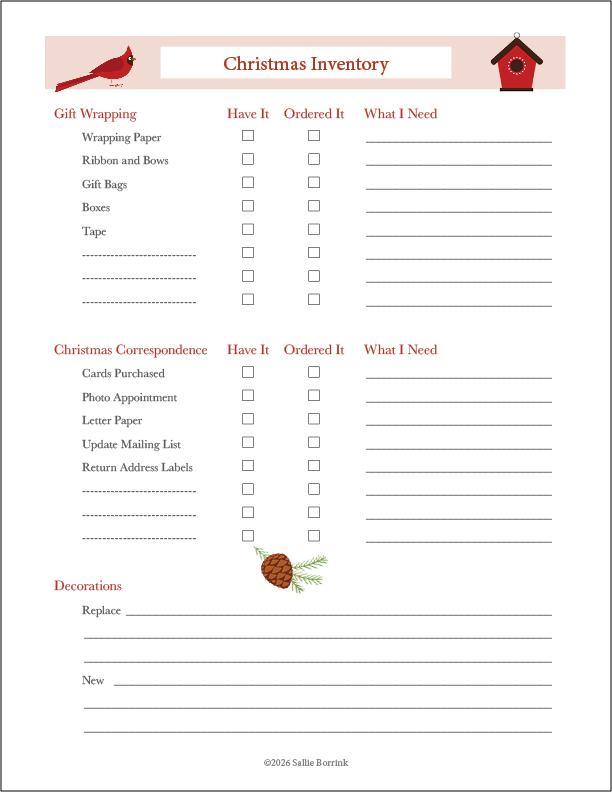
- Christmas correspondence inventory for cards, photographs, stationery, address labels, and other supplies
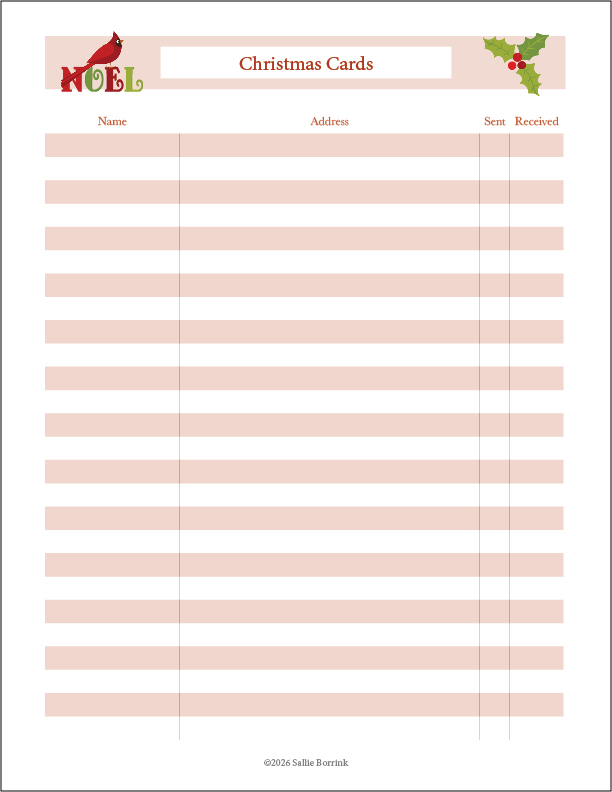
- Christmas card list for recording names, addresses, and cards sent and received
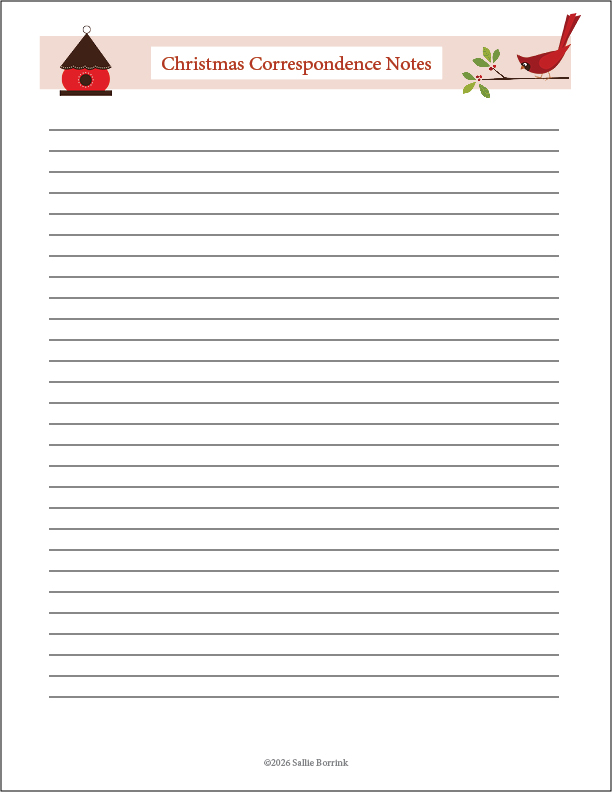
- Christmas correspondence notes for address changes, personal reminders, letter ideas, or other details
You can print the complete set or choose only the pages you need. If your card list is long, print additional copies of the Christmas card tracker.
A Christmas card list should help you care for people. It should not become another standard you feel obligated to meet perfectly.
Download the Free Printable Christmas Card List and Correspondence Planner
This is a free PDF download. No email address or sign-up is required.
Decide Why You Send Christmas Cards
Before purchasing cards or making a mailing list, take a moment to consider why you send Christmas cards.
Perhaps you enjoy carrying on a tradition that has been part of your family for years. You may want to maintain relationships with people who live far away, encourage someone who has experienced a difficult year, or send a tangible reminder that the birth of Jesus Christ is worth celebrating.
Knowing why you send cards can help you decide whom to include and how much time and money to devote to the project.
It can also give you permission to simplify.
You do not have to send an elaborate card to everyone you have ever known. You do not have to include a perfect family photograph. You do not have to write a long personal note in every card.
Choose an approach that allows you to communicate sincerely without turning a thoughtful tradition into a burden.
Begin With a Christmas Correspondence Inventory
Before buying anything, check the correspondence supplies you already have. Christmas cards, stationery, envelopes, and address labels are easy to tuck away and forget from one December to the next.
The correspondence inventory page gives you a place to check whether you have or need:
- Christmas cards
- A family photograph
- Paper for a Christmas letter
- An updated mailing list
- Return-address labels
- Envelopes
- Printer ink
- Postage stamps
Gather your supplies in one place and write down what is missing. You may discover that you need very little.
If you plan to order personalized cards or schedule a family photograph, make a note of the deadline. During a full holiday season, it is not enough to tell yourself that you will remember later. Write it down and place the date on your calendar.
Make Your Christmas Card Mailing List
Begin with the people to whom you genuinely want to send a Christmas greeting. Depending on your circumstances, your list might include:
- Close family members
- Extended relatives
- Friends who live far away
- Former neighbors
- Church friends or ministry leaders
- People who have encouraged your family
- Older friends and relatives who especially appreciate receiving mail
- Someone who may be lonely during the Christmas season
Do not begin by asking how many cards you sent last year or how many other people appear to send. Begin with the actual people you hope to remember.
If the list becomes longer than your time or budget allows, it is acceptable to make adjustments. You might send cards to different groups in alternating years, write to distant friends while greeting local friends in person, or send a simpler card without a letter.
A shorter list completed with genuine care is better than a long list that fills you with dread.
Use the Printable Christmas Card Address List
The Christmas card tracker includes columns for the recipient’s name and address, as well as places to mark whether a card was sent or received.
As you prepare your cards, work down the list and mark each one when it is complete. You can address all the envelopes at once or complete a few cards each day.
There is no one right way to do it.
Some women enjoy setting aside one afternoon to complete all their Christmas correspondence. Others prefer to write five cards each evening over the course of a week. Choose the approach that best suits the way you naturally plan and work.
If doing everything in one sitting feels overwhelming, divide the project into smaller tasks:
- Update the mailing list
- Purchase cards and stamps
- Write or print the Christmas letter
- Address the envelopes
- Sign the cards
- Add personal notes
- Stuff, seal, and stamp the envelopes
- Take the finished cards to the mailbox
Completing one kind of task at a time can make the entire project feel more manageable.
Update Christmas Card Addresses as You Go
One of the most valuable uses for a Christmas card list is maintaining current addresses from year to year.
When someone moves, record the new address as soon as you receive it. Do not rely on finding the envelope, text message, or email again next December.
The notes page can be used to record:
- New mailing addresses
- Name changes
- People to add next year
- Cards returned as undeliverable
- Friends who have moved into assisted living
- Family members serving in the military
- Temporary addresses
- International mailing information
After Christmas, update your permanent address book or digital contacts with these changes. Then place the printable list with your Christmas supplies or household records so it will be easy to find the following year.
Keep Track of Christmas Cards Sent and Received
The “Sent” column provides a simple record of the cards you mailed. The “Received” column can help you remember who sent a card to your family.
This does not mean Christmas correspondence should become an exchange in which we send only to people who send something to us. A card is a gift, not an invoice.
However, keeping track of cards received can still be useful. It may remind you to check on someone you have not heard from, update an address, or add a new friend to next year’s list.
It also provides an opportunity to pray for people as their cards arrive. Rather than quickly looking at each card and setting it aside, take a moment to remember the person or family before God.
A practical list can serve a deeper purpose when it helps us pay attention to people.
Consider Including a Christmas Letter
A Christmas letter can be an enjoyable way to catch up with people who do not regularly hear the details of your family’s life. It can be sent on its own or tucked inside a Christmas card.
The best letters are usually easy to read, selective in their details, and written with the recipient in mind. You do not need to include every event from the previous twelve months. Choose the parts of the year that will help friends and relatives reconnect with your family.
It is also perfectly acceptable to mention difficulties or losses. Honesty makes a letter human. The goal is neither to present a flawless family nor to provide an exhaustive account of every disappointment.
If you would like help getting started, read my five tips for writing a great Christmas letter. I share how to write for the reader, select the most interesting highlights, make the letter memorable, keep it to a reasonable length, and proofread it carefully.
Write Personal Notes Without Exhausting Yourself
A handwritten message can make a Christmas card especially meaningful, but writing a long note in every card may not be realistic.
You can still make cards personal with one or two sincere sentences:
- Tell the recipient that you thought of her during the year
- Mention a shared memory
- Thank someone for a kindness
- Congratulate the family on an important event
- Express sympathy for a loss or difficult season
- Tell the person you are praying for her
- Write a simple blessing for the coming year
Not every message needs to be unique or profound. Sincere words do not have to be lengthy.
If your list is large, consider adding personal notes only where you feel they are especially needed. Sign the remaining cards warmly and send them without guilt.
Remember People Who May Especially Need Encouragement
Christmas can be a joyful season, but it can also deepen loneliness and grief. As you review your mailing list, think about the people whose circumstances may make a card particularly meaningful.
You might include:
- Someone who lost a loved one during the year
- A widow or widower spending Christmas alone
- An older person who rarely receives personal mail
- A family dealing with illness
- A missionary living far from home
- A military family separated by deployment
- Someone who recently moved and is beginning again in a new place
- A friend going through an uncertain or difficult season
You do not need perfect words. A simple acknowledgment of the person’s circumstances may be enough:
I know this Christmas may be difficult, and I wanted you to know that you are remembered and prayed for.
We sometimes hesitate to write because we are afraid of saying the wrong thing. But silence can leave a hurting person feeling forgotten. Write simply, kindly, and honestly.
Send Christ-Centered Christmas Greetings
Christmas correspondence gives Christian families a natural opportunity to acknowledge the reason for our celebration.
You do not need to turn a personal Christmas card into a sermon. A verse of Scripture, a line from a Christmas hymn, or a simple expression of gratitude for the birth of Christ can bear quiet witness to what Christmas means in your home.
You might include:
- A favorite passage from the account of Christ’s birth
- A brief statement of gratitude for God’s faithfulness
- A Christ-centered Christmas blessing
- A sentence about what your family has learned during the year
- A line from a familiar Christmas hymn
Write naturally and sincerely. The aim is not to manufacture a spiritual-sounding message. It is simply to speak truthfully about the hope we have in Jesus Christ.
Give Yourself Permission to Simplify Christmas Cards
There may be years when you have the time and interest to choose beautiful stationery, write a family letter, include photographs, and add personal notes to every card.
There may be other years when purchasing a box of simple cards and signing your names is all you can reasonably do.
Both are acceptable.
If your family is experiencing illness, grief, financial strain, a new baby, a move, or an unusually demanding season, simplify the project. Reduce the mailing list. Send cards later than usual. Write a New Year’s letter instead. Skip a year if necessary.
A tradition should serve the people who practice it. The people should not become servants of the tradition.
How to Use Your Free Christmas Card Printables
Download the PDF and save it somewhere you will be able to locate it again. Print the complete set or select individual pages through your printer settings.
You might keep the pages:
- In a three-ring Christmas binder
- Inside your household planning notebook
- On a clipboard with your Christmas cards
- In a folder with stamps, address labels, and stationery
- Near the desk or table where you write your cards
If you have a longer mailing list, print as many copies of the card tracker as you need. You can also place the pages in clear sheet protectors and use a fine-point wet-erase marker if you want to reuse them.
The Christmas correspondence planner is undated, so you can print fresh copies or use the same protected pages in future years.
Download the Free Printable Christmas Card List and Correspondence Planner
Print only the pages that will help you. No email address or sign-up is required.
A Simple Way to Remember People at Christmas
Christmas cards may seem like a small thing. They are pieces of paper that travel through the mail and often remain on display for only a few weeks.
But small acts of remembrance matter.
A card can renew a connection, encourage a lonely person, acknowledge a difficult year, or remind someone that she has not been forgotten.
Gather the supplies you already have.
Write down the people you hope to remember.
Send what you reasonably can.
Then allow this simple tradition to be an expression of love rather than another source of pressure.
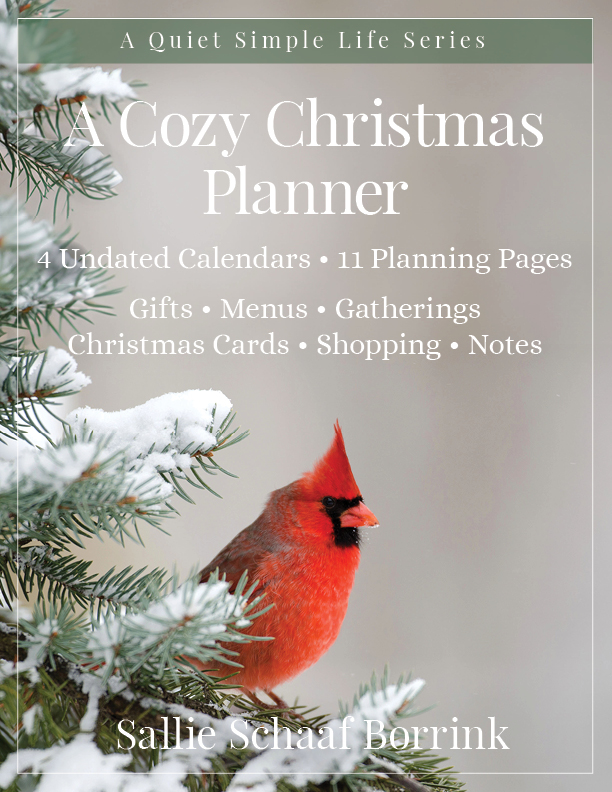
Would you prefer everything in one file? A Cozy Christmas Planner includes all four undated calendars and eleven printable planning pages for $4.

Leave a Reply