

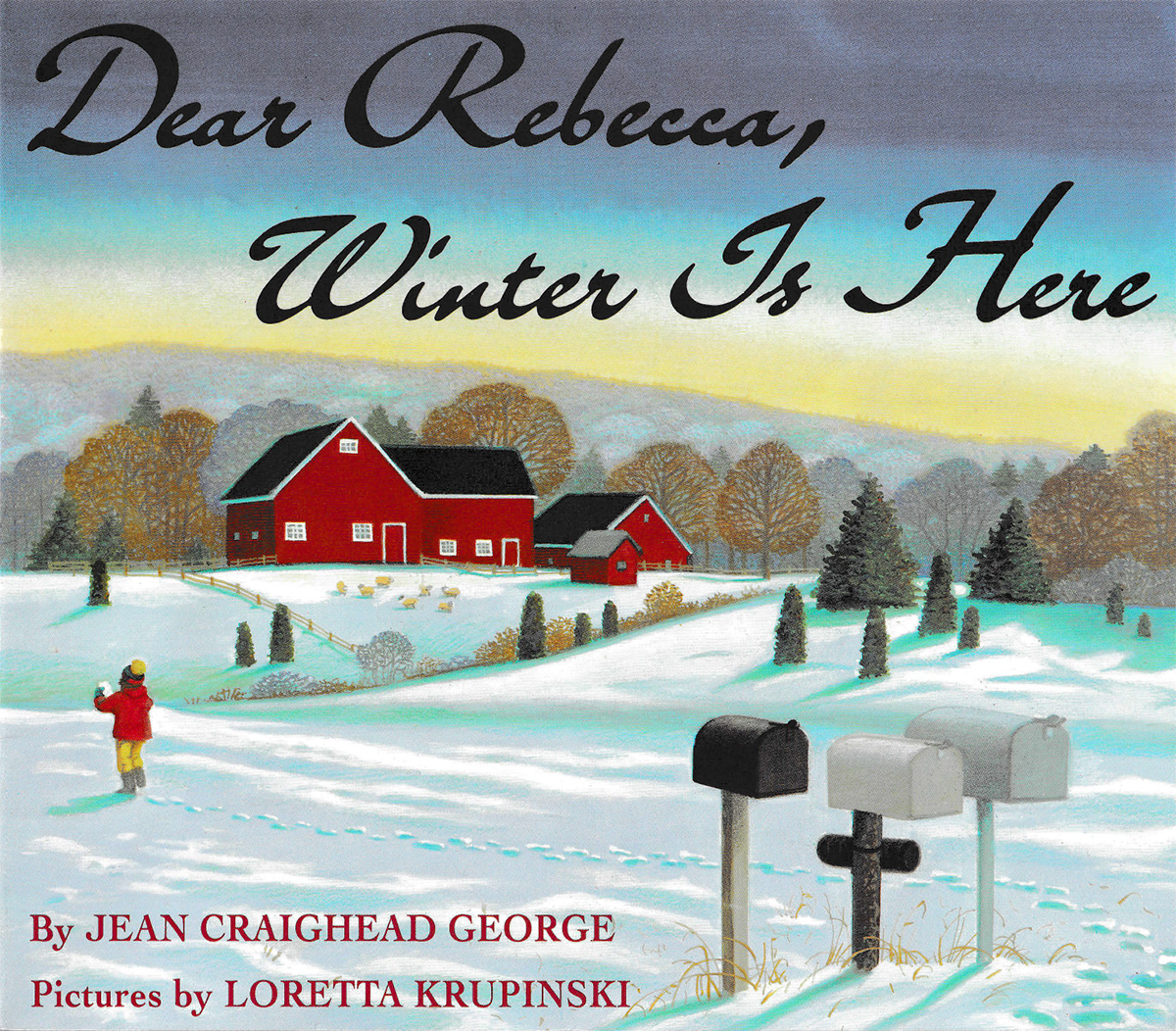
Dear Rebecca, Winter Is Here by Jean Craighead George, illustrated by Loretta Krupinski, is a lovely picture book that approaches the idea of seasons in a different way. It is written as a grandmother writing a letter to her granddaughter about the arrival of winter. As the grandmother discusses the change and why the seasons turn, it leaves the reader thinking about the sun instead of the snow.
The book is a unique way to introduce the solstices while doing a winter picture book study. The science is real and the story makes it relatable for small children.
Book Snapshot
- Author: Jean Craighead George
- Illustrator: Loretta Krupinski
- Ages: 4–9
- Themes: Seasons, solstices, science and nature, letters and family, the turning year
- Best For: Winter reading, seasonal studies, science and nature study, and a simple introduction to solstices and hibernation
About the Book
Author Jean Craighead George was a naturalist before she was a children’s writer. Her background gives her the ability to write this big idea of solstices in a way that is easy for children to understand. She presents the science simply by briefly explaining the earth’s tilt, the changing light, and the arrival of winter.
Rebecca’s grandmother mentions changes that happen for both of them as well as various animals such as groundhogs and bears sleeping through the cold, the birds going south, and the bees staying in to eat honey in the winter.
Loretta Krupinski’s paintings are lovely, soft, and full of the wide sky and low winter light that the story is really about. The book takes place in two places at once (a child’s summer memory and a grandmother’s winter) so the illustrations carry both the warmth of June and the twilight of December.
Dear Rebecca, Winter Is Here is a book that rewards rereading. Read it the first time as a lovely story. Read it again as a science lesson and the words take on depper meanings the second time through.
Why This Book Works for Homeschooling
- Science: thinking about the solstices, the tilt of the earth, seasonal light, and migration all give you a reason to go outside and observe creation
- Nature Study: learning about how animals prepare for and survive winter
- Calendar Skills: noting the dates of equinoxes and solstices and marking them on a wall calendar
- Geography: discerning why hemispheres matter and how they differ
- Language Arts: observing a friendly letter between loved ones across distance and across years
Picture Book Activities
Use these ideas to turn your read-aloud time into a simple picture book study. Pick one or two that capture your children’s interest.
- Science: Look up the solstice and equinox dates for the coming year and write them on your family calendar.
- The Bigger Ideas: Consider the thought that winter begins on June 21. Discuss the idea that the same day can be the first of winter for one person and high summer for another. This is geography and astronomy coming together for a child and a wonderful opportunity to use your globe to make it concrete.
- Hibernation: Choose a favorite animal and learn how it prepares for winter and lives through it. Bears, bats, chipmunks, frogs, and ladybugs all behave differently.
- Feeding Birds: Winter birding is one of the simplest nature studies. Find out which seeds the birds in your area actually prefer, put out a feeder, and keep a simple notebook of who comes to visit. Keep a bird guidebook handy and teach your child what distinguishing characteristics to look for first when trying to identify a bird (colors, body and beak shape, etc.).
- Geography: Use a globe or world map to find where you are in relation to the equator and discuss what winter means for people who live near it.
- Sorting: Use the free Fall and Winter Venn Diagram printable to sort out what belongs to fall, what belongs to winter, and what belongs to both.
- Math: Practice number order with the free Cozy Candle Counting Puzzle for numbers 1–10 and the Snowy Window Counting Puzzle for numbers 11–20. Both fit the season and sit nicely in a morning basket.
- Writing: Use the Cozy Winter Home Writing Pages for narration, copywork, descriptive writing, or a short composition about how your family prepares for or enjoys winter.
- Read Aloud Together: If you are building a winter reading list, pair this with Sleep Tight Farm: A Farm Prepares for Winter and Snowed In. The three books together offer a cozy vision of how winter can be a lovely time for families.
Discussion Questions
- Why do you think the grandmother wrote this letter to Rebecca instead of telling her?
- Why do birds travel to the “underside of the earth” while bears stay put?
- If you had the option to hibernate at home for the winter, would you? What would you need to hibernate?
- Which season do you enjoy best, and what would you miss if it never came?
- If you wrote a letter to your own grandchild someday, what would you tell her about this winter?
Final Recommendation
Dear Rebecca, Winter Is Here is a simple, thoughtful book that pairs naturally with a winter nature study, a bird feeder, and the rest of your cozy reading list. It is brief enough to finish in one sitting and rich enough to keep a notebook of related topics going all winter.
Looking for more cozy picture book activities? You’ll find many more ideas here: picture book activities and printables.

Leave a Reply