

I am just young enough that I “missed out” on learning to read using Dick and Jane books. I know many people who are slightly older than me remember them fondly. In fact, I’m sure seeing some of these below will bring a lot of memories rushing back for some!
Reading with Dick and Jane Books?
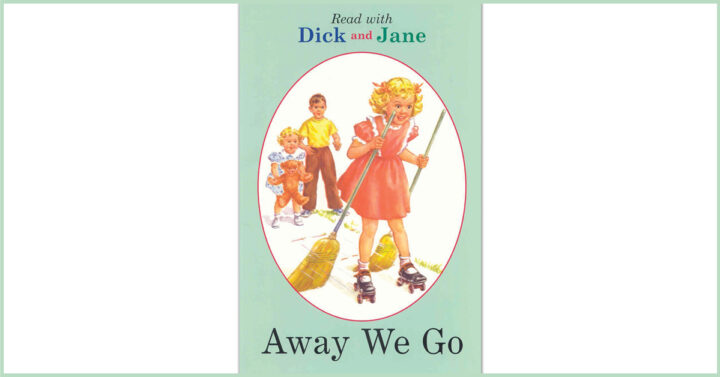
A few years ago I found three of the newly published Dick and Jane readers (like the Dick and Jane Away We Go in the picture) in a book sale so I decided to pick them up for a few cents each.

This past summer Caroline found them on my bookshelf and asked me to read one to her. So we sat down and I started reading.
The Ultimate Dick and Jane Storybook Collection Dick and Jane 4 book boxed setDick and Jane Reading Collection (12 Volumes)Dick and Jane Level 1 & Level 2 Readers (Set of 12)
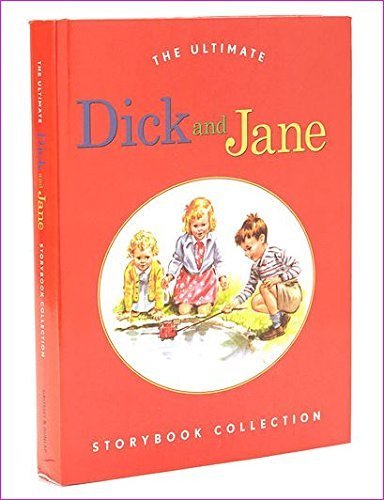
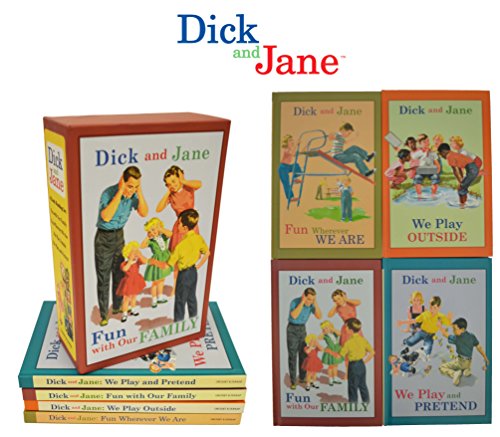
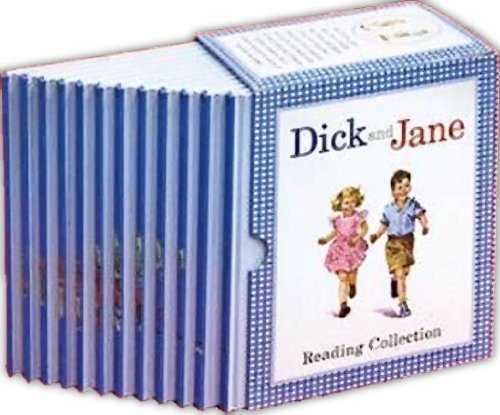
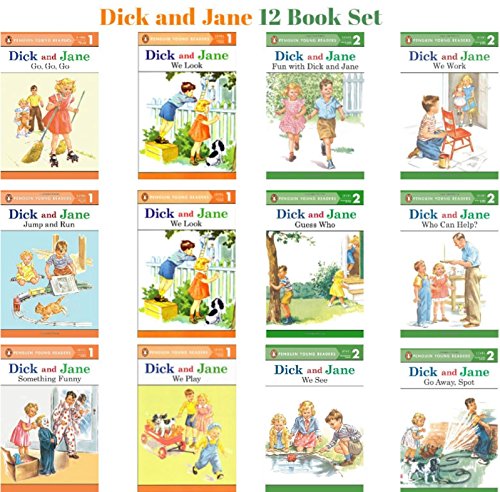
She gave me the most quizzical look when I started reading the stilted sentences. She clearly thought I was teasing her or making a joke or something. She had never heard a story that was so contrived or had such awkward language. Caroline quickly lost interest and we didn’t even finish reading one of the readers.
Caroline has heard us read literally hundreds of different books to her over the past six years. She knew this was not the quality literature she was used to hearing.
It was a striking moment for me as a mom and home educator. When you fill your child’s mind with quality, the other stuff is readily apparent even at a young age.



 Fellowes Comb Binding Machine To Make My Own “Workbooks”
I am certain that those of us who love the books do so because of the nostalgia! 😉
Hi Brenda,
Yes, I realize it is the nostalgia factor for lots of people. But it was painful to read them, even as readers for children learning to read.
“Oh, oh, oh!”
Sally said, “See it work.
Work, work, work.”
No one talks like that. It really was pretty funny to see Caroline’s reaction to them. We’re a family that teases and so she was SURE this had to be a joke.
My children too have found the language rather humorous. But I love the illustrations!
I LOVE the pictures!
And since my husband and I learned to read with these we sometimes find ourselves talking that way.
“Hear _______ (child’s name) whine.
Whine, whine. whine.”
or the inevitable
“See dog spot.
Spot, spot, spot.”
But you are right about the stories. Ugh.
They are boring, but they work well with kids who are struggling to learn to read. Reece is severe dyslexic. I read to him all sorts of great literature in our read-alouds (right now we’re reading Shiloh) but for instructional reading he has to have very boring, awful Orton-Gillingham books so that he’s successful and makes phonemic connections.
I’m 50, and I think that anyone my age or older who attended public schools, had at least some interaction with the tail end of these Basic Reader Series books. It really is a thing of nostalgia for us. I entered the first grade in fall of 1968. Those first two years, we had Sally, Dick & Jane; Friends Old & New; More Friends Old & New; and on and on. 😉 Then I was put into the advanced readers group. It felt strange being separated from some of your classmates during reading lessons–my group got New Horizons, while the more basic readers group got Vistas, etc.
Definitely, in hindsight of course, nobody talked like that. But I guess we little kids were mesmerized because we were the tail-end Baby Boomer tykes who were brought up in that whole “everybody lives, looks and behaves like that” consciousness of those books’ terrific illustrations. Ironically, I had difficulties learning to read initially, and I found it cumbersome working my way through differentiating the sounds of these readers’ words as well as vowel and consonant clusters. So while I wax nostalgic for them, I realize it was beneficial, on many academic and cultural levels, that school systems and curricula moved on from these series.
One memory that brings a chuckle to me is recalling our teachers leading our reading sessions with these basic reader book series: I remember that the teacher’s editions seemed always to weigh like practically 10 pounds, and the teachers trying to balance reviewing their editions’ special materials in the front of the book, which preceded the replication of the students’ text in the second sections of the book. The teacher’s pages usually took up more than double the space of the actual related student texts! 🙂
The books are especially nostalgic for me because, not only I learn to read with them, but I was named after them . My brother was in second grade and named me Sallie Jane.
Nice to see another Sally spelled Sallie.
The Dick and Jane books begin with a few words, and gradually introduce new words one at a time. I think that is brilliant; I have no idea why this brilliant and astoundingly teaching method was abandoned. What do people have against concise, logical teaching methodologies? If you think about it, this is nothing more than a more efficient and rapid way to replicate the natural learning process.
Naturally the beginning stories are for beginners and are repetitive and stilted, they aren’t meant for kids who have been accustomed to reading complex stories, they are meant for beginners.
The Dick and Jane readers have been a godsend for my ESL learners, especially those who struggle with dyslexia.